|
|
|
HOME
|
US Navy -
ships
|
US Navy - air
units
|
USMC - air
units
|
International
Navies
|
Weapon Systems
|
Special Reports |
|
Surface Vessel Weapon System Naval Strike Missile - NSM / JSM Kongsberg Defence & Aerospace anti-ship / land-attack cruise missile |
 |
| 05/26 |
|
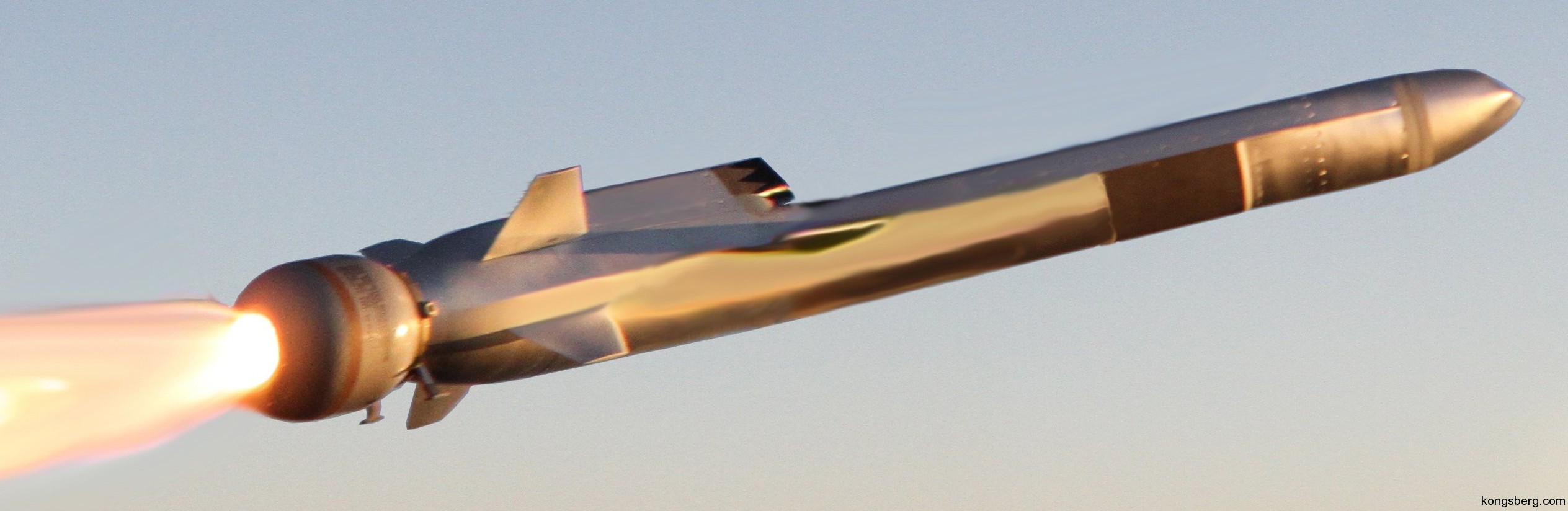
Naval Strike Missile (NSM) ... is an anti-ship and land-attack missile developed by the Norwegian company Kongsberg Defence & Aerospace (KDA). The original Norwegian name was Nytt sjømålsmissil (literally "New sea target missile", indicating that it was the successor of the Penguin missile). The English marketing name Naval Strike Missile was adopted later. US designation is RGM-184A. The state-of-the-art design and use of composite materials are meant to give the missile sophisticated stealth capabilities. The missile will weigh slightly more than 400 kg (880 lb) and have a range of more than 185 km (115 mi; 100 nmi). NSM is designed for littoral waters ("brown water") as well as for open sea ("green water and blue water") scenarios. The usage of a high-strength titanium alloy blast/fragmentation warhead from TDW is in line with the modern lightweight design and features insensitive high-explosive. Warhead initiation is by a void-sensing Programmable Intelligent Multi-Purpose Fuze designed to optimise effect against hard targets. NSM is able to fly over and around landmasses, travel in sea skim mode, and then make random manoeuvres in the terminal phase, making it harder to stop by enemy countermeasures. The target selection technology provides NSM with a capacity for independent detection, recognition, and discrimination of targets at sea or on the coast. This is possible by the combination of an imaging infrared (IIR) seeker and an onboard target database. NSM is able to navigate by GPS, inertial and TERCOM systems. After being launched into the air by a solid rocket booster which is jettisoned upon burning out, the missile is propelled to its target in high subsonic speed by a turbojet sustainer engine - leaving the 125 kg multi-purpose blast/fragmentation warhead to do its work, which in case of a ship target means impacting the ship at or near the water line. When installed on ships, NSMs can be deck-mounted in packs of one, two, three, four, or six launchers. Total installation weight, including electronics and cabling, is 8,600 lb (3,900 kg) for 4 launchers, 17,000 lb (7,700 kg) for 8 launchers, and 26,000 lb (12,000 kg) for 12 launchers. NSM Coastal Defence System (CDS): Polish variant: An NSM coastal battery consists of three missile launch vehicles (MLV), one battery command vehicle (BCV), three combat command vehicles (CCV), one mobile communication center (MCC), one mobile radar vehicle (MRV) with TRS-15C radar, one transport and loading vehicle (TLV), and one mobile workshop vehicle (MWV). Each MLV carries 4 missiles and can be connected to the CCV by optical fiber or radio up to 10 km (6.2 mi) away; up to 6 launchers with 24 missiles can be netted together at once. Australian variant: The fire unit was developed by Kongsberg Defence Australia and Thales Australia. The fire unit is made of: Launcher: StrikeMaster based on the Thales Bushmaster vehicle. Command and control: Fire Control Centre based on the Thales Bushmaster vehicle, and made and designed by Kongsberg Defence Australia. Missile resupply: Missile Re-supply Vehicle based on the Thales Bushmaster vehicle. Navy/Marine Corps Expeditionary Ship Interdiction System (NMESIS) ... is the US variant of the NSM Coastal Defence System (CDS). Two NSM launchers are fitted on a Remotely Operated Ground Unit for Expeditionary (ROGUE) Fires Vehicle, produced by Oshkosh Defense. US NSM systems are jointly manufactured by Raytheon Missiles & Defense and Kongsberg Defence & Aerospace. NSM specifications: Mass: 407 kg (897 lb) with booster / 350 kg (770 lb) without booster Length: 3.96 m (13 ft) with booster / 3.48 m (11 ft 5 in) missile Width: 700 mm (2 ft 4 in) stowed / 1.36 m (4 ft 6 in) in flight Warhead: 120 kg (260 lb) Titanium-cased penetrating blast and controlled fragmentation Engine: Microturbo TRI-40 turbojet with solid rocket booster Maximum speed: Mach 0.93 (316 m/s; 1,040 ft/s) Guidance system: GPS-aided INS (GAINS), Laser altimeter, TERCOM, Imaging Infra-Red (IIR) Operational range: >200 km (110 nmi; 120 mi) NSM / 250 km (130 nmi; 160 mi) NSM 1A / >300 km (190 mi; 160 nmi) (2025) - - - - - Joint Strike Missile (JSM) ... is a multi-role, air-launched cruise missile under development by the Norwegian company Kongsberg Defence & Aerospace and American company Raytheon Missiles & Defense. A development of the Naval Strike Missile (NSM), the Joint Strike Missile (JSM) will feature an option for ground strike and a two-way communications line, so that the missile can communicate with the central control room or other missiles in the air. This missile will be integrated with the Lockheed Martin F-35 Lightning II. Studies have shown that the F-35 would be able to carry two of these in its internal bays, while four additional missiles could be carried externally. Lockheed Martin and Kongsberg signed a joint-marketing agreement for this air-launched version of the NSM, as well as an agreement committing both parties to integrating the JSM on the F-35 platform. The project is funded by Norway and Australia. Kongsberg signed a contract for the first phase of development of the JSM in April, 2009, which is scheduled for completion within 18 months. The JSM will have multicore computers running the Integrity real-time operating system from Green Hills Software. US designation is AGM-184A. Compared with the Naval Strike Missile, the Joint Strike Missile features: A larger warhead Form factor altered to allow the missile to fit into the F-35's internal bays The ability to attack sea and land targets Compatibility with various aircraft as launch platforms Improved range JSM specifications: Mass: 416 kg (917 lb) Length: 4.00 m (13 ft 1 in) Width: 480 mm (1 ft 7 in) stowed Height: 520 mm (1 ft 8 in) Warhead: 120 kg (260 lb) blast-fragmentation Detonation mechanism: Time delay, impact Blast yield: 100 kg (220 lb) TNT equivalent Engine: Williams International F-415 small turbofan Maximum speed: Mach 0.9 (310 m/s; 1,000 ft/s) estimated Operational range: / 555 km (345 mi; 300 nmi) hi-hi-lo / 185 km (115 mi; 100 nmi) lo-lo-lo / >350 km (220 mi; 190 nmi) Guidance system: GPS, INS, TERCOM, Imaging Infrared (IIR) capable of Autonomous Target Recognition (ATR), Passive RF homing capabilities for attacking radar-emitting threats, Two-way datalink sources: wikipedia, Kongsberg |
| images |
|
Naval Strike Missile (NSM) / RGM-184A  Naval Strike Missile (NSM) was launched from USS Gabrielle Giffords (LCS 10)  Naval Strike Missile (NSM) was launched from USS Gabrielle Giffords (LCS 10)  Naval Strike Missile (NSM) was launched from USS Gabrielle Giffords (LCS 10) 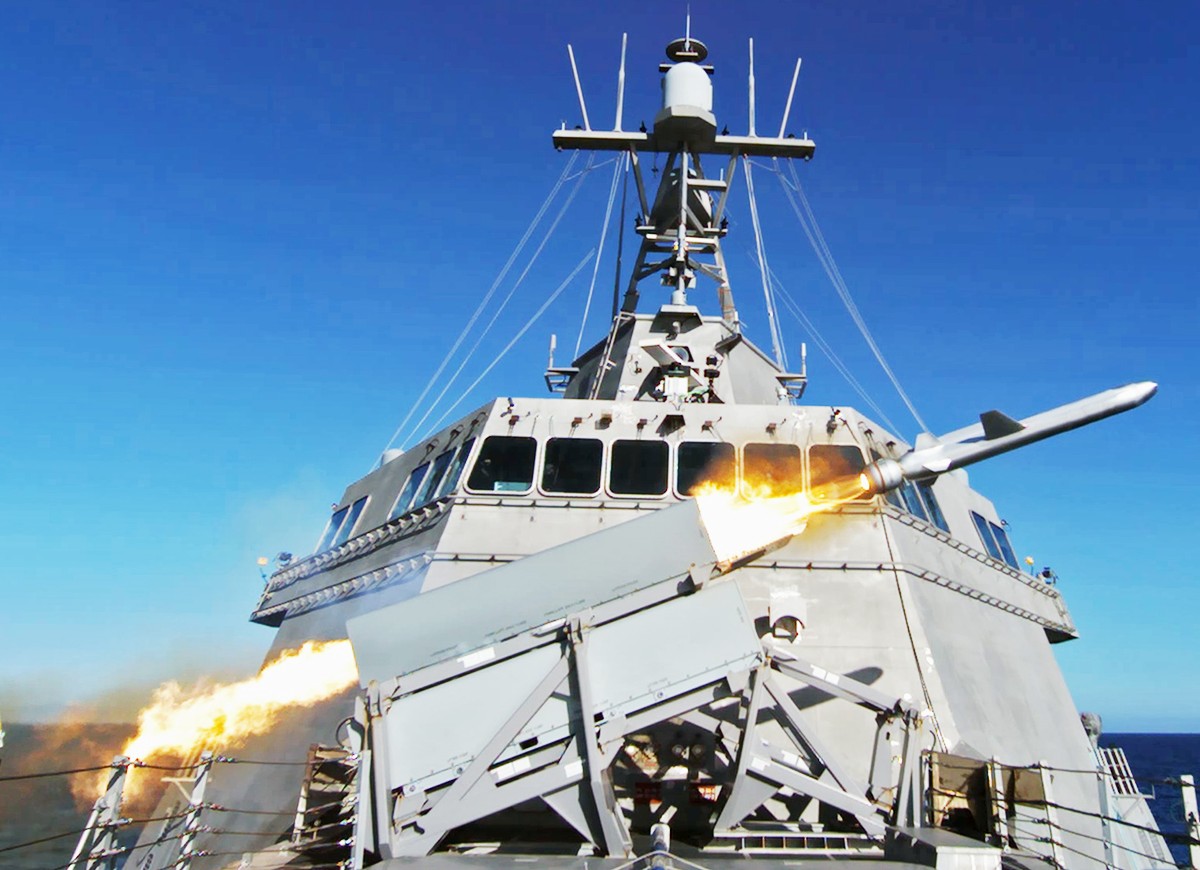 Naval Strike Missile (NSM) was launched from USS Gabrielle Giffords (LCS 10) 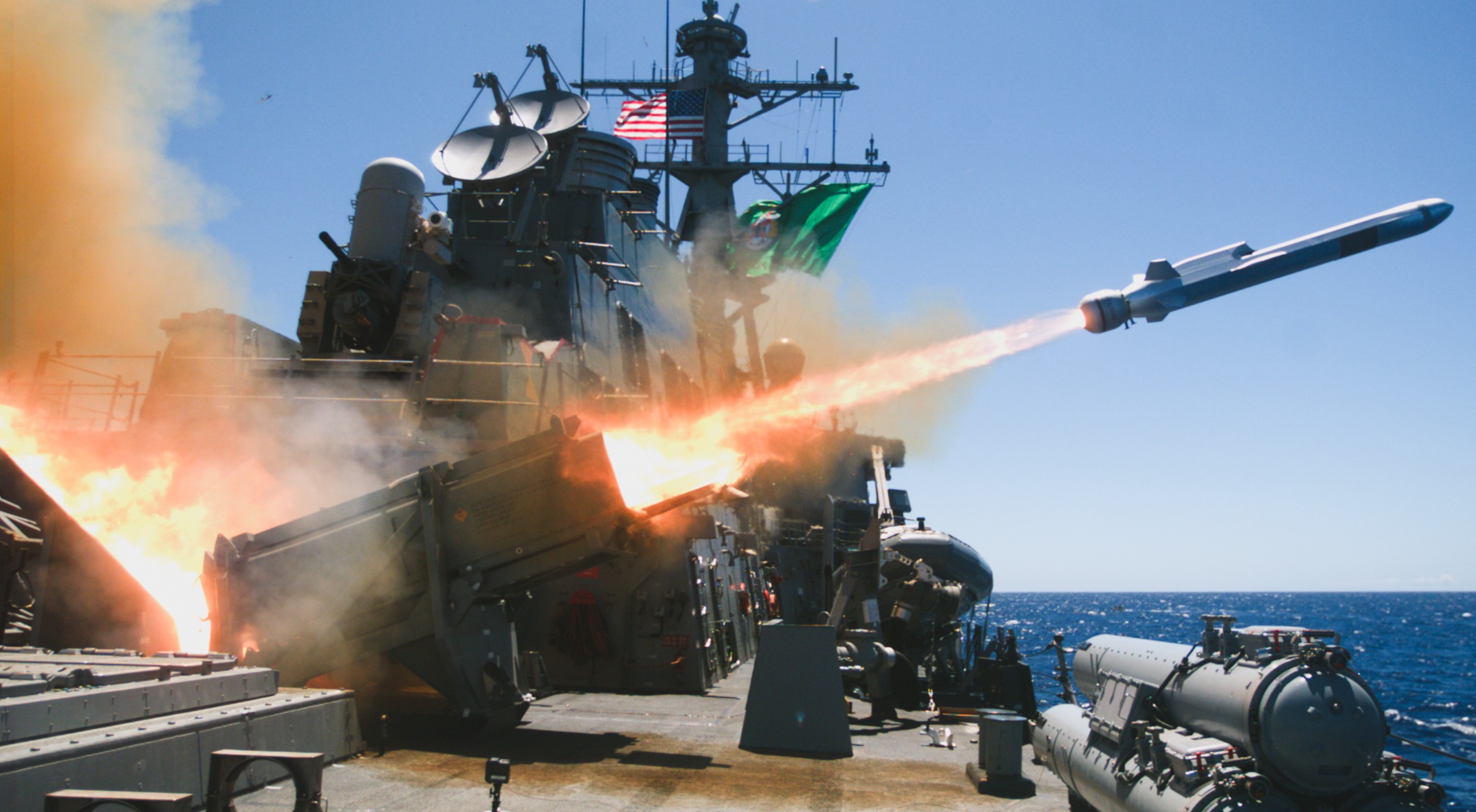 an NSM was fired the first time from USS Fitzgerald (DDG 62) during Exercise RIMPAC 22 - July 2022      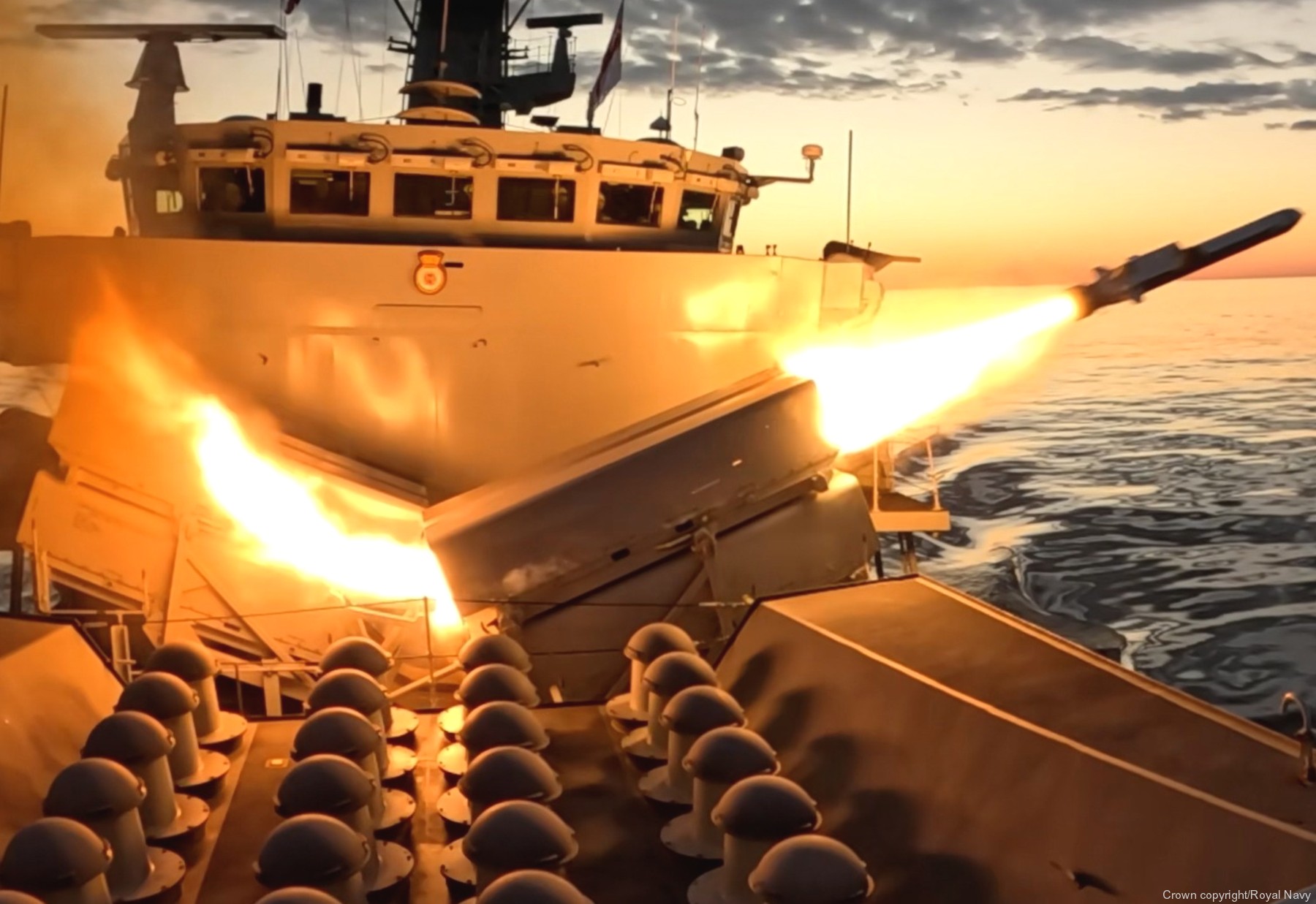 Royal Navy Type 23 Duke class Frigate 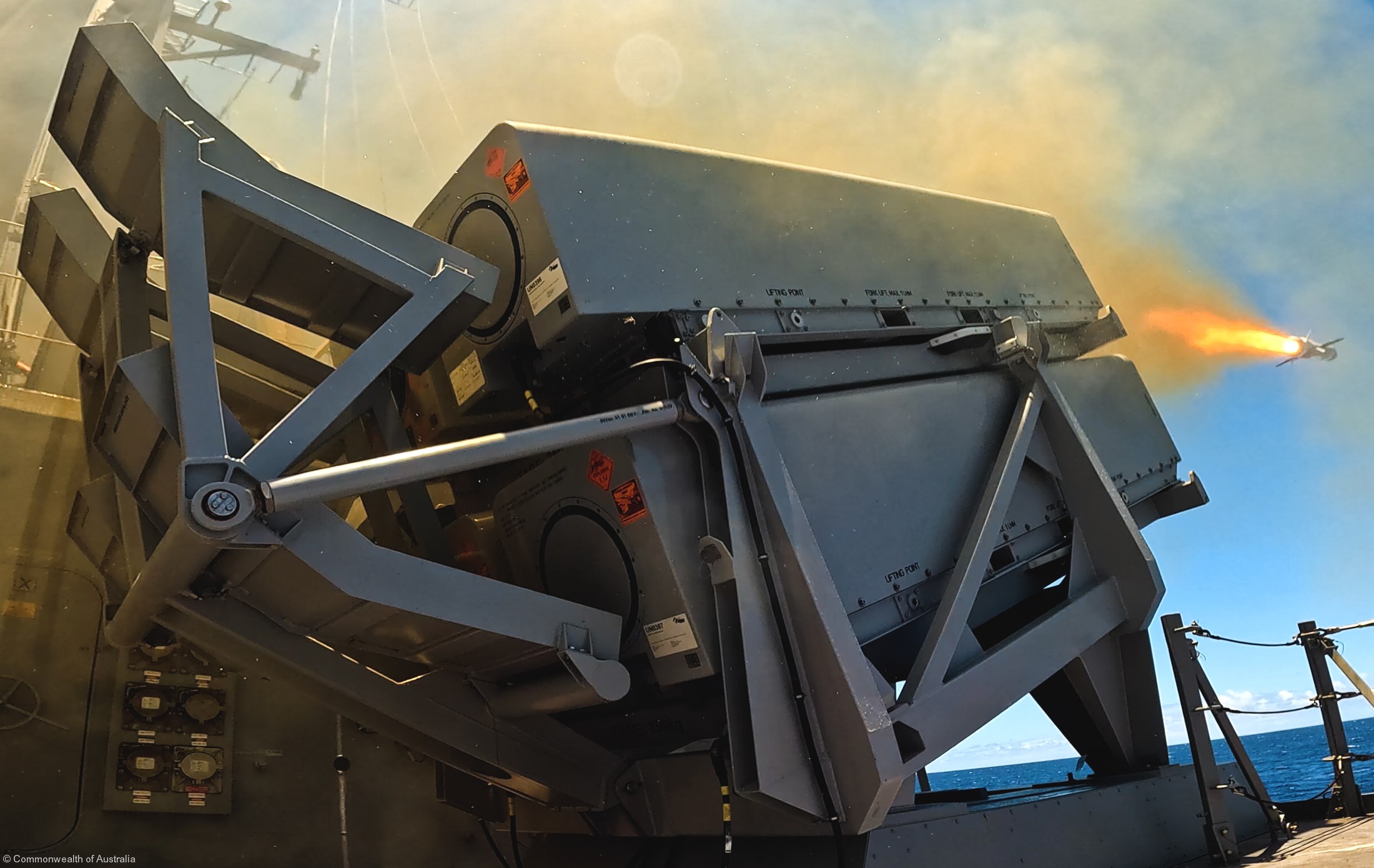 Royal Australian Navy Hobart class Guided Missile Destroyer DDGH 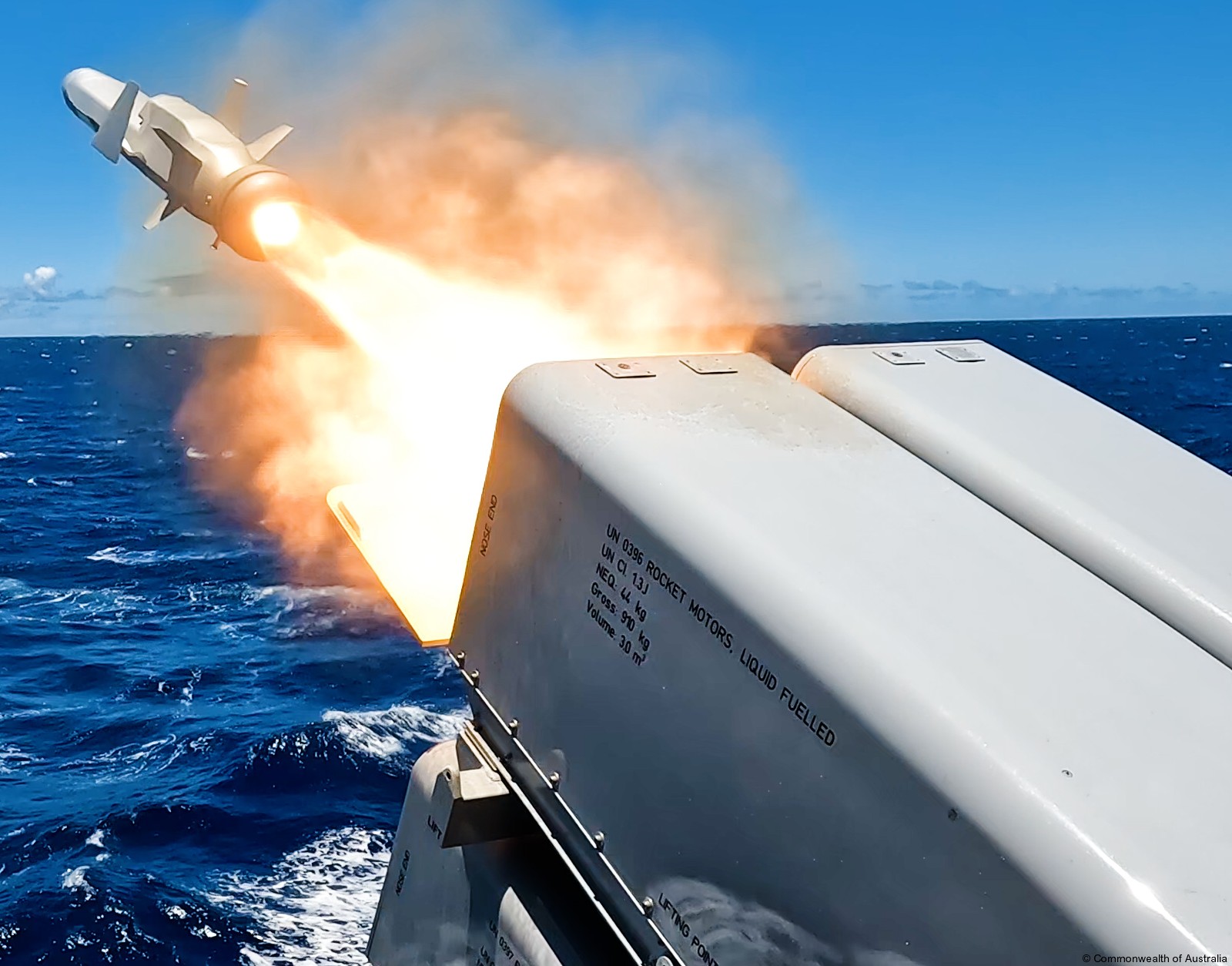 Royal Australian Navy Hobart class Guided Missile Destroyer DDGH 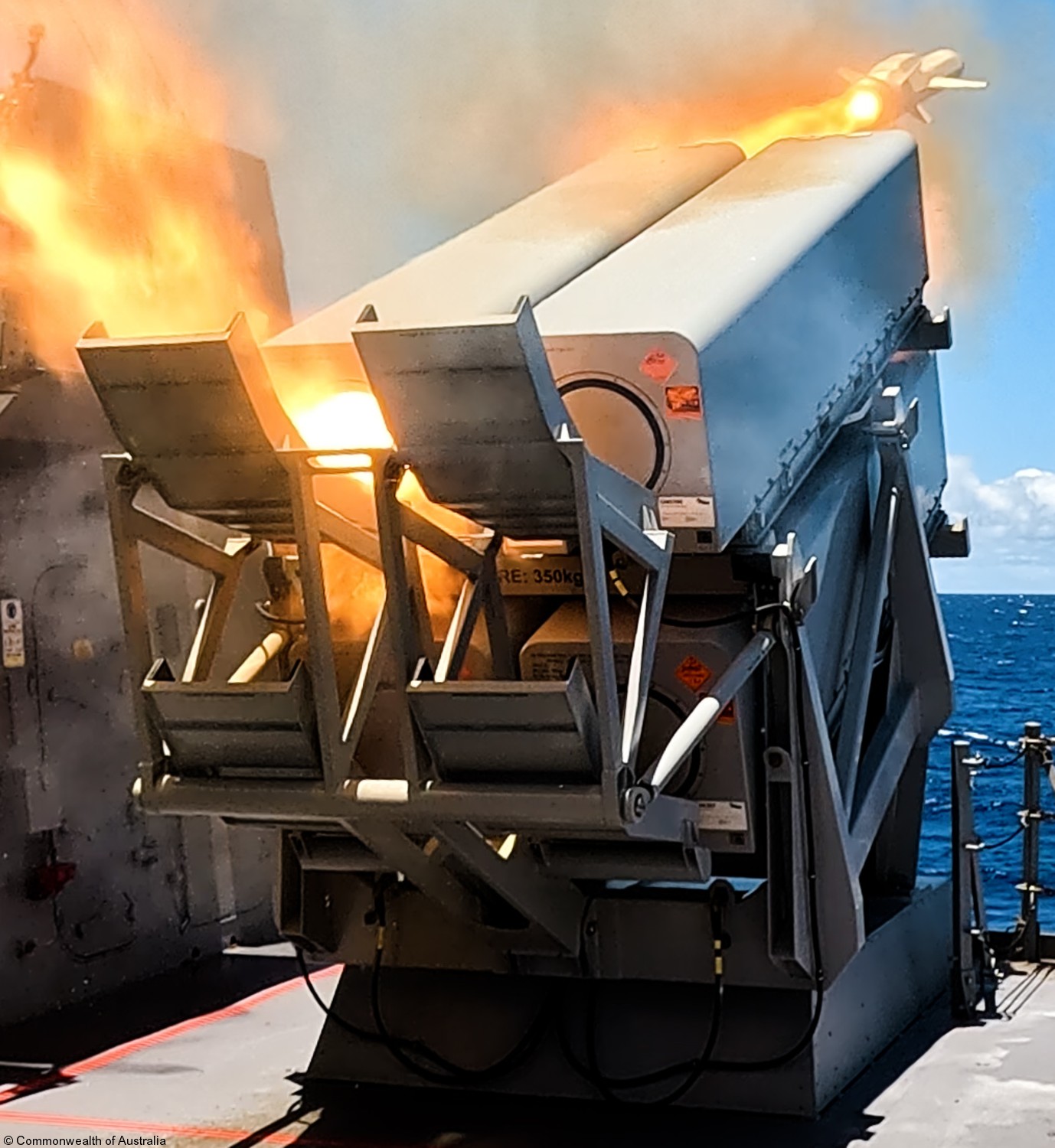 Royal Australian Navy Hobart class Guided Missile Destroyer DDGH 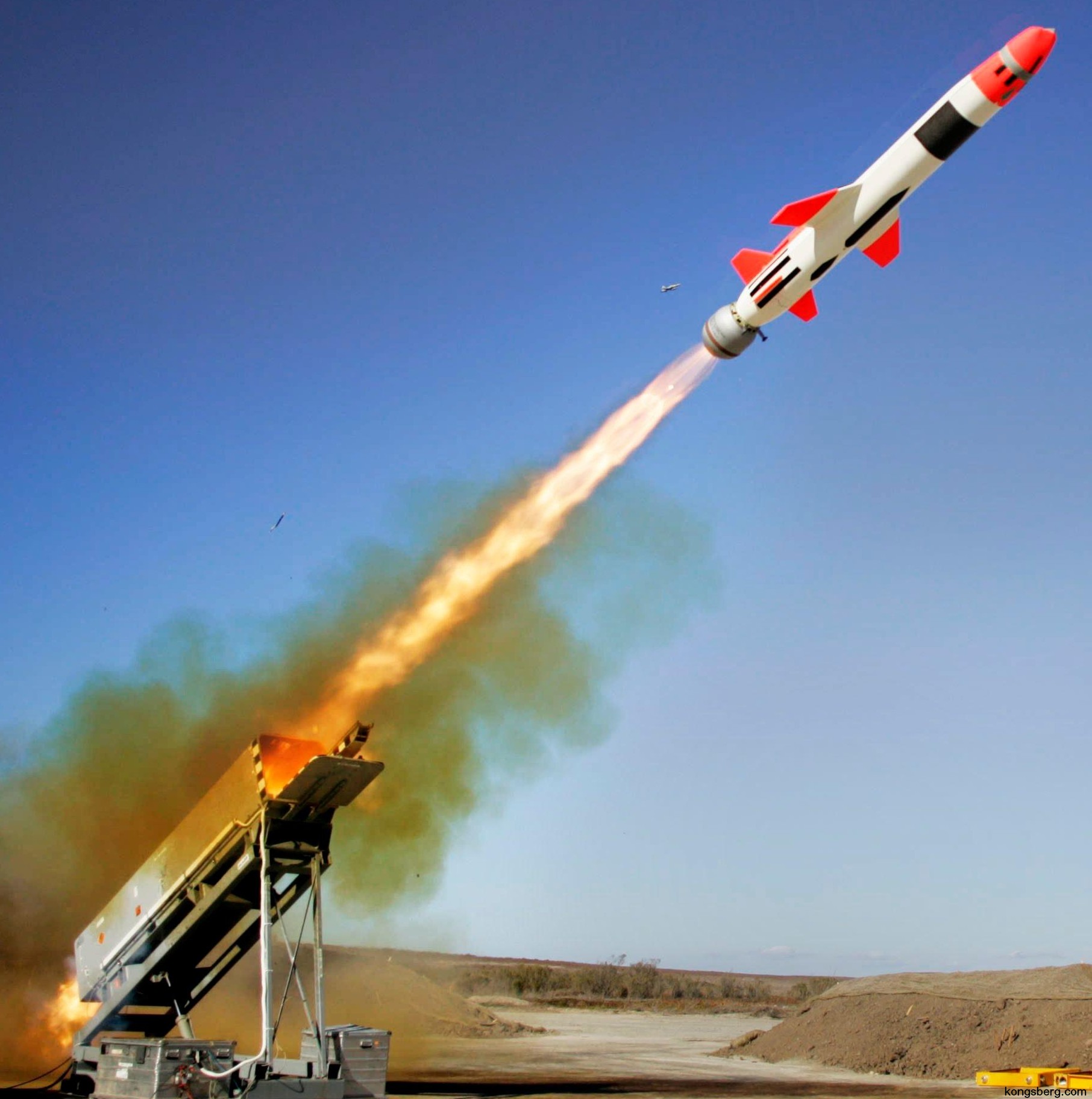 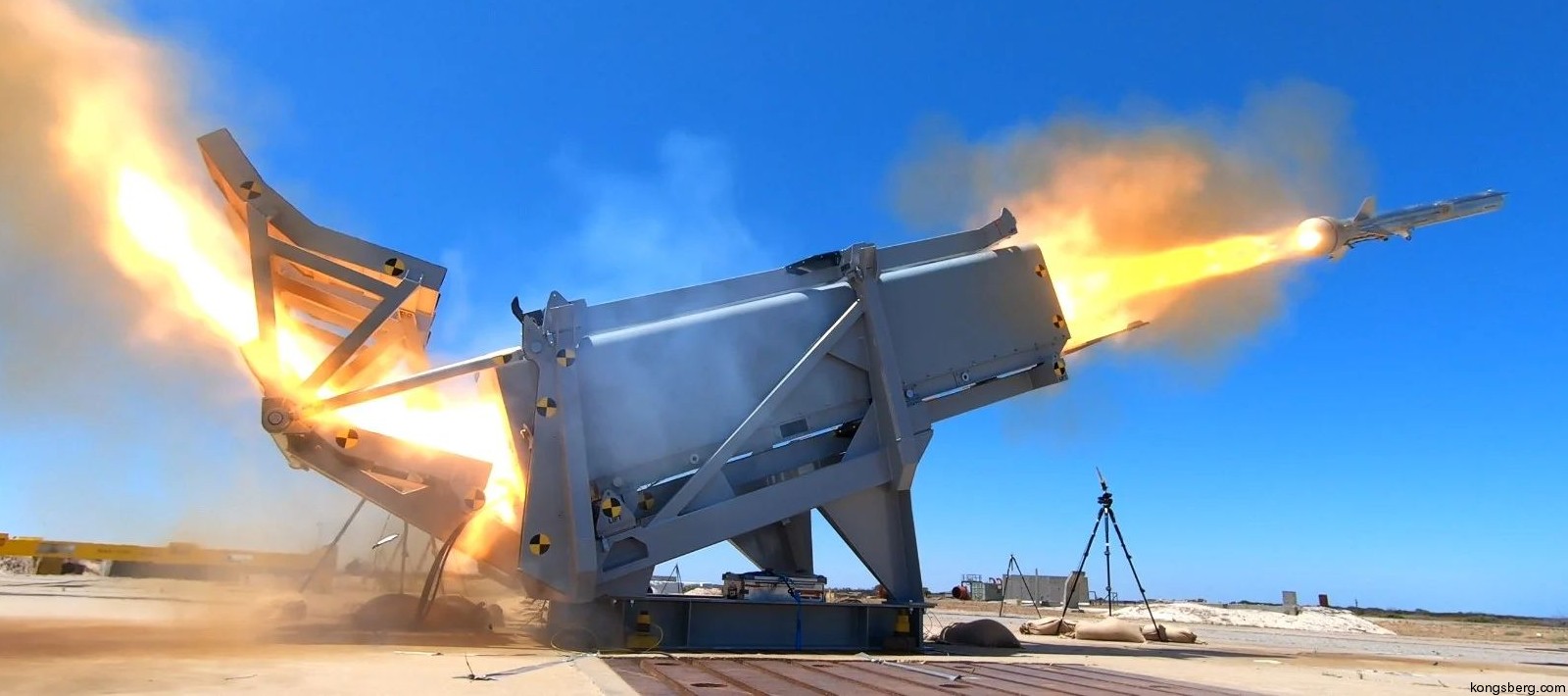 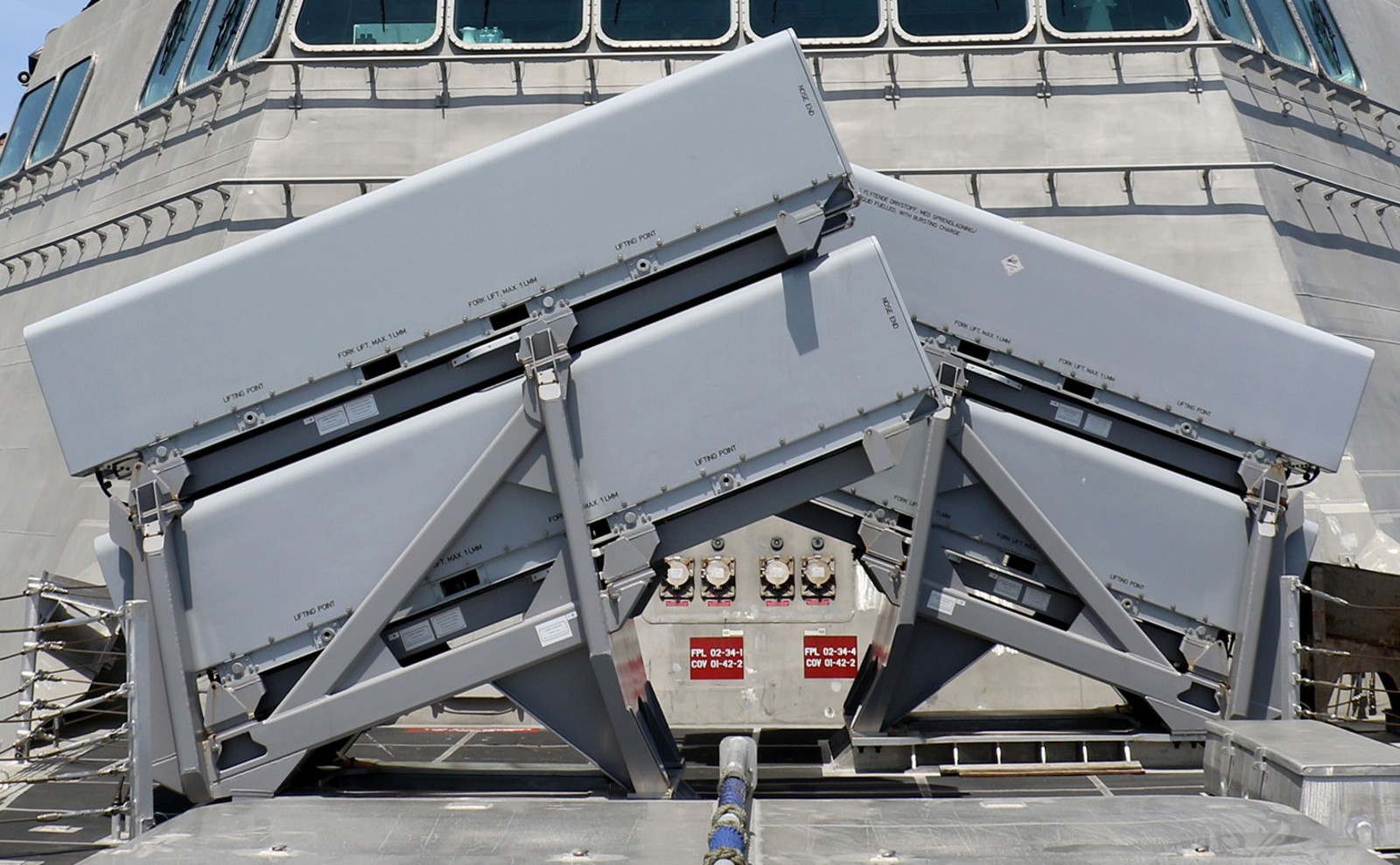 Naval Strike Missile (NSM) launchers aboard an US Navy Independence class Littoral Combat Ship (LCS) 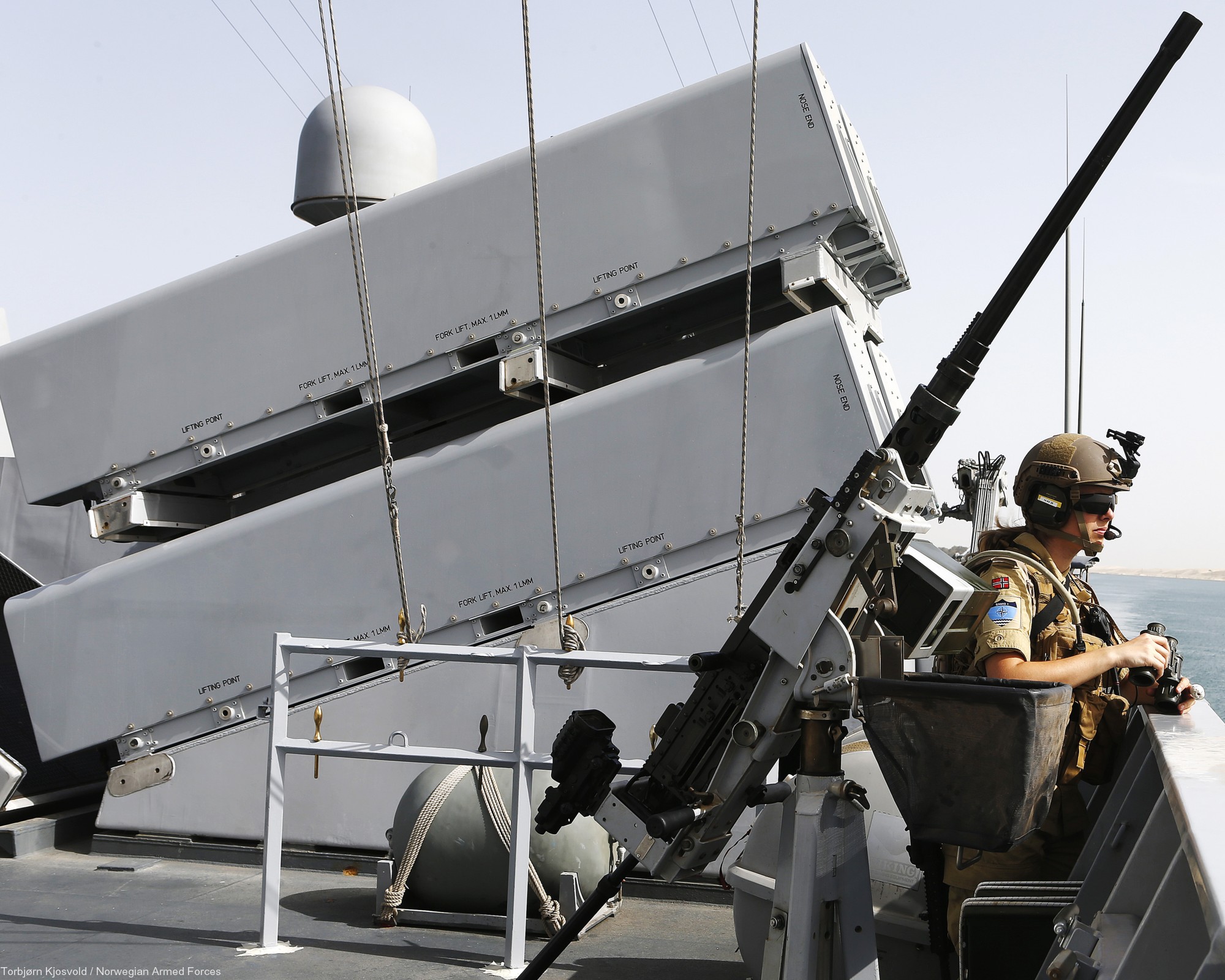 Naval Strike Missile (NSM) quadruple launchers aboard a Royal Norwegian Navy Fridtjof Nansen class Frigate  Naval Strike Missile (NSM) quadruple launchers aboard a Royal Norwegian Navy Fridtjof Nansen class Frigate  Naval Strike Missile (NSM) quadruple launchers aboard a Royal Norwegian Navy Skjold class Corvette 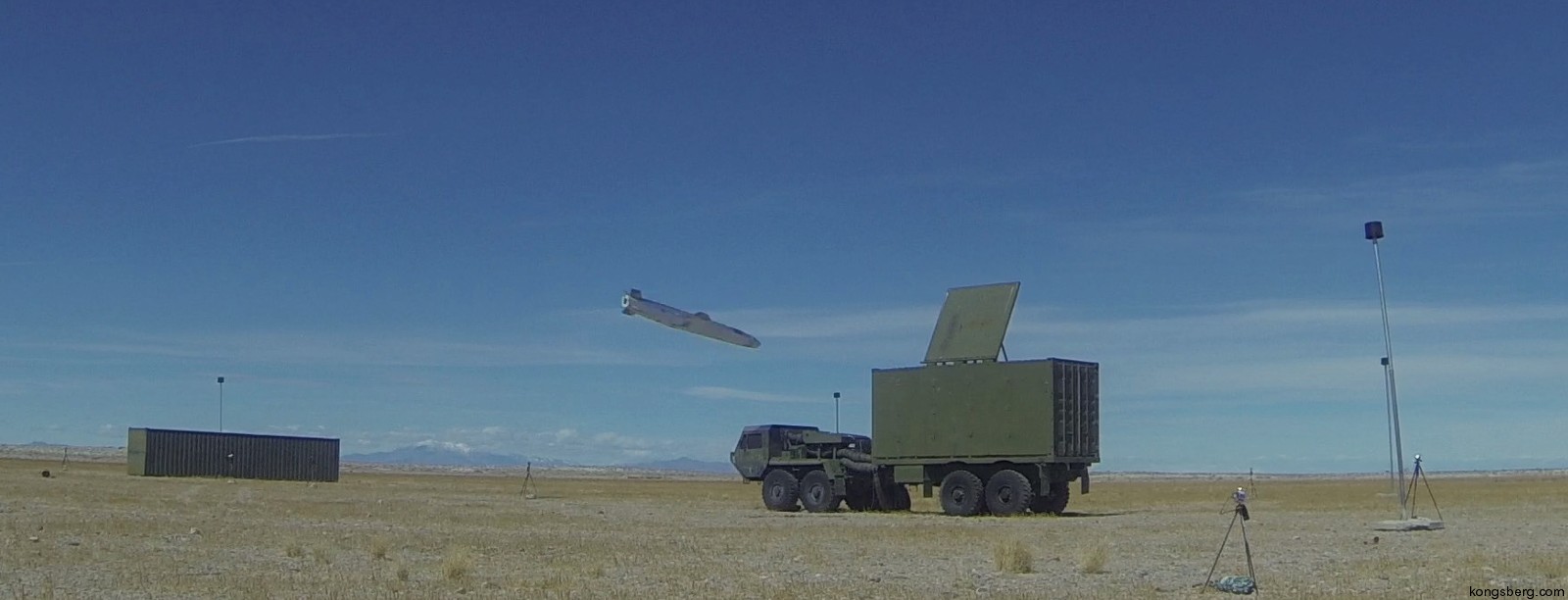 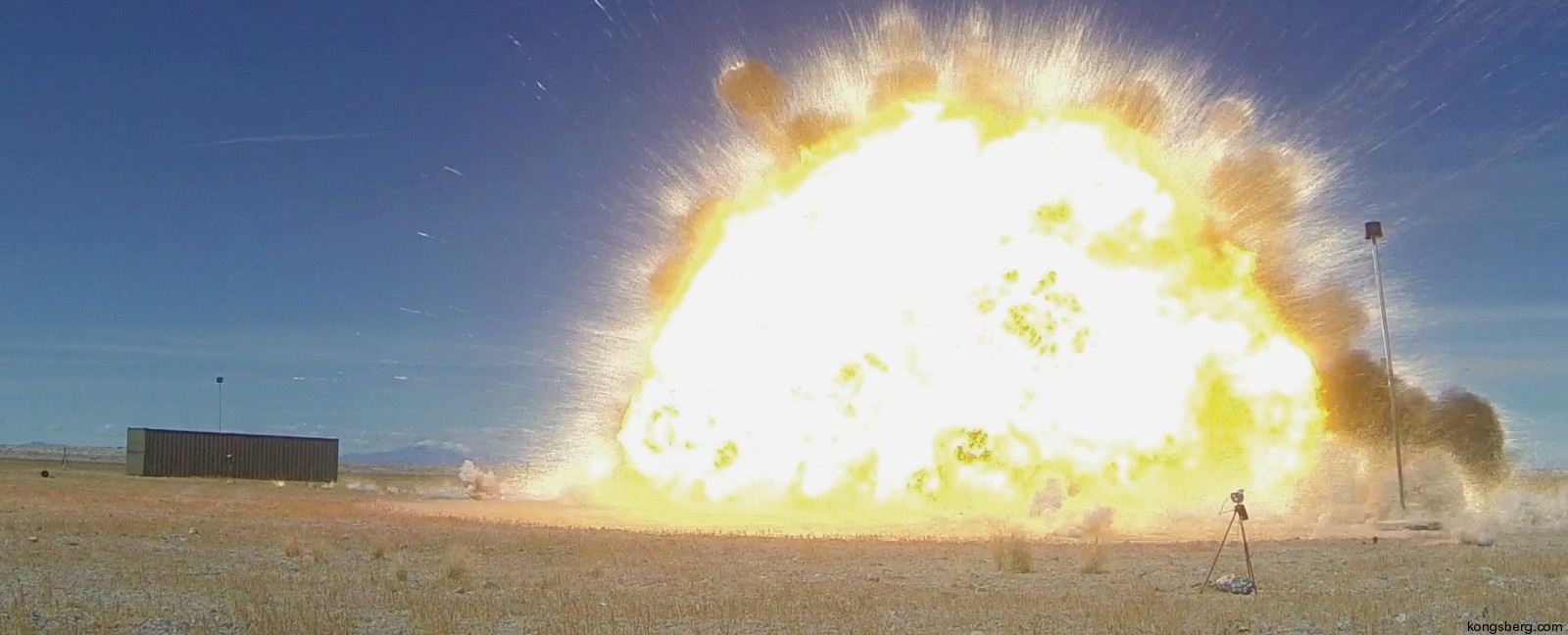 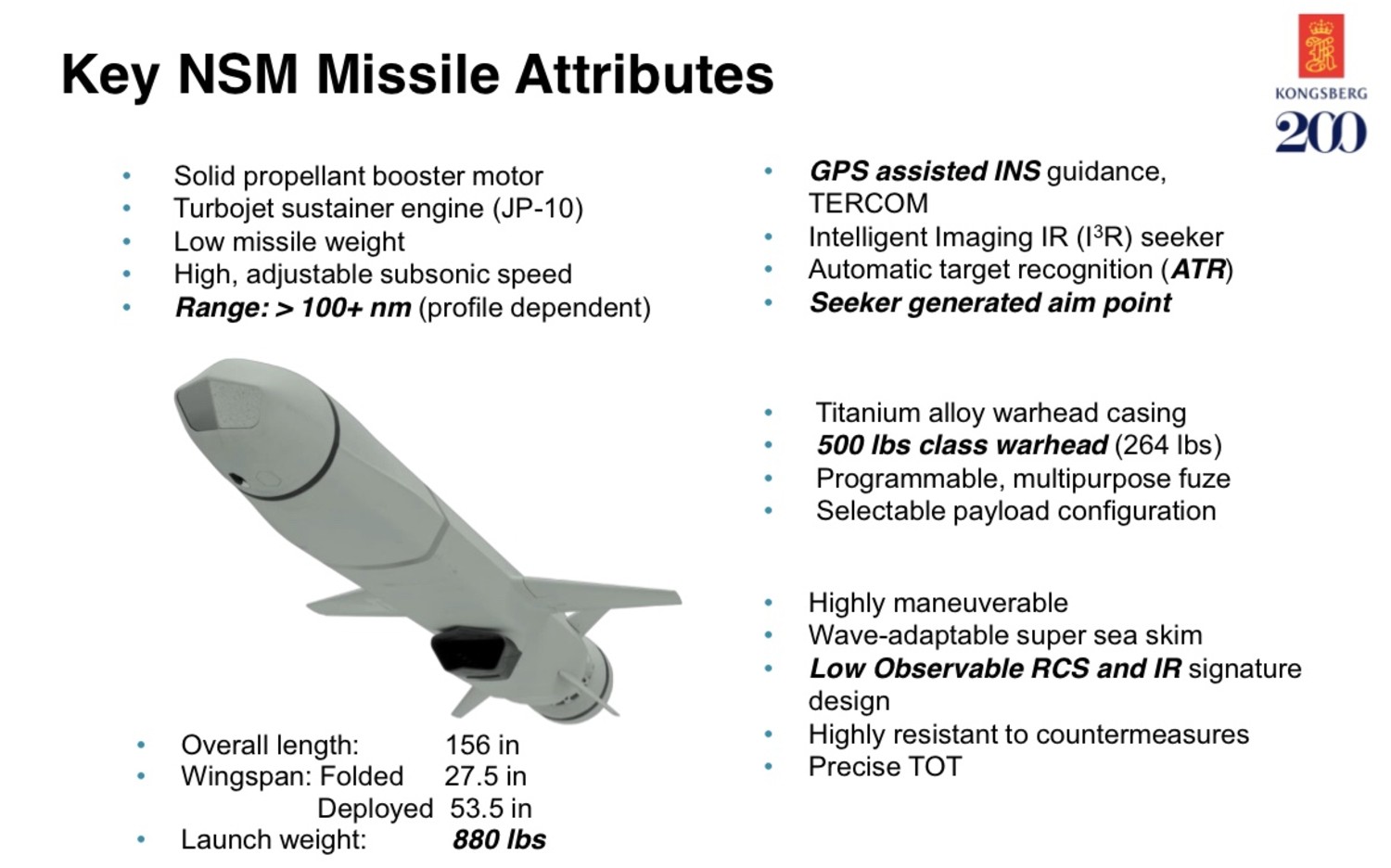 Naval Strike Missile (NSM) Coastal Defence System (CDS) 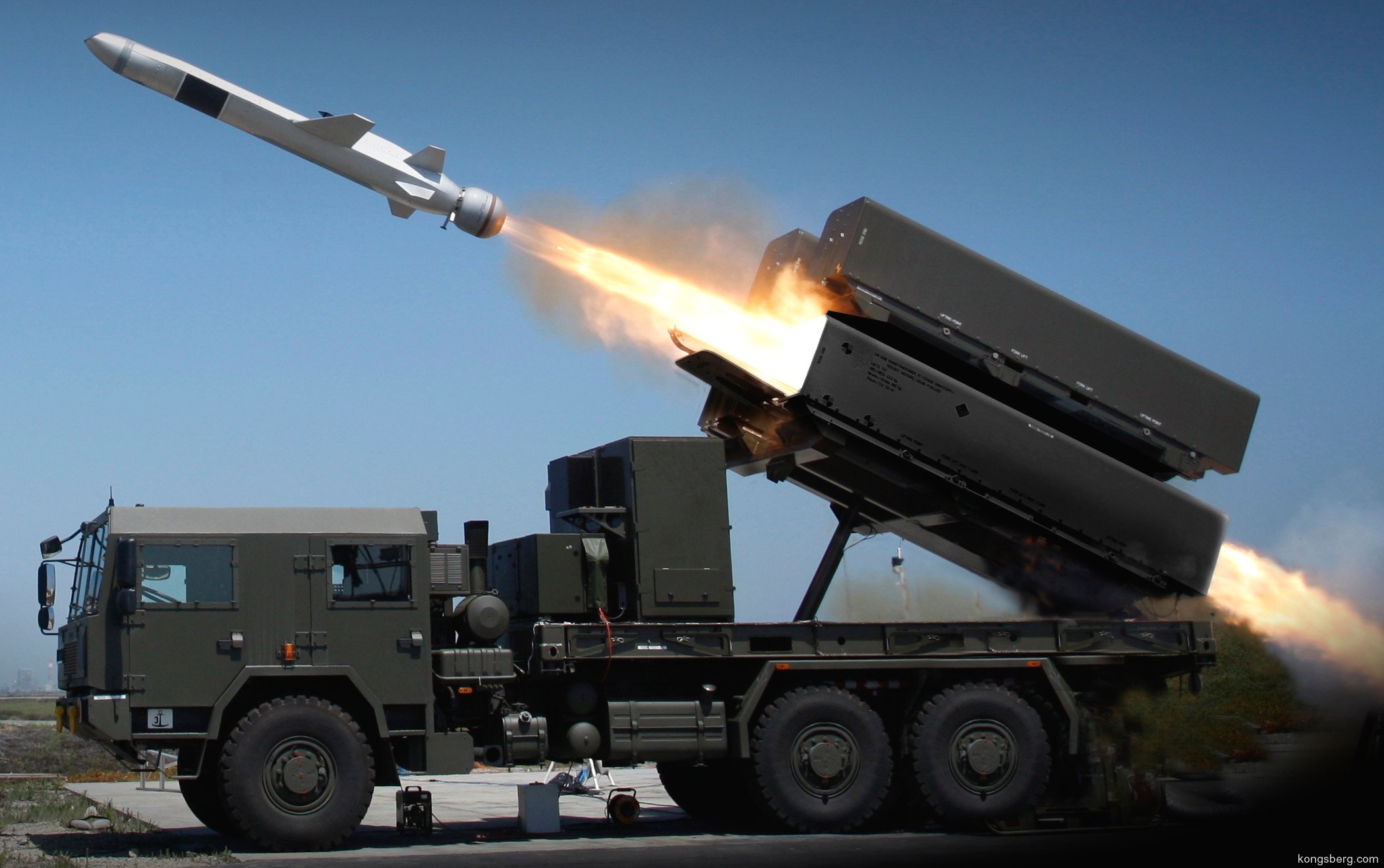 vehicle launched Naval Strike Missile (NSM) 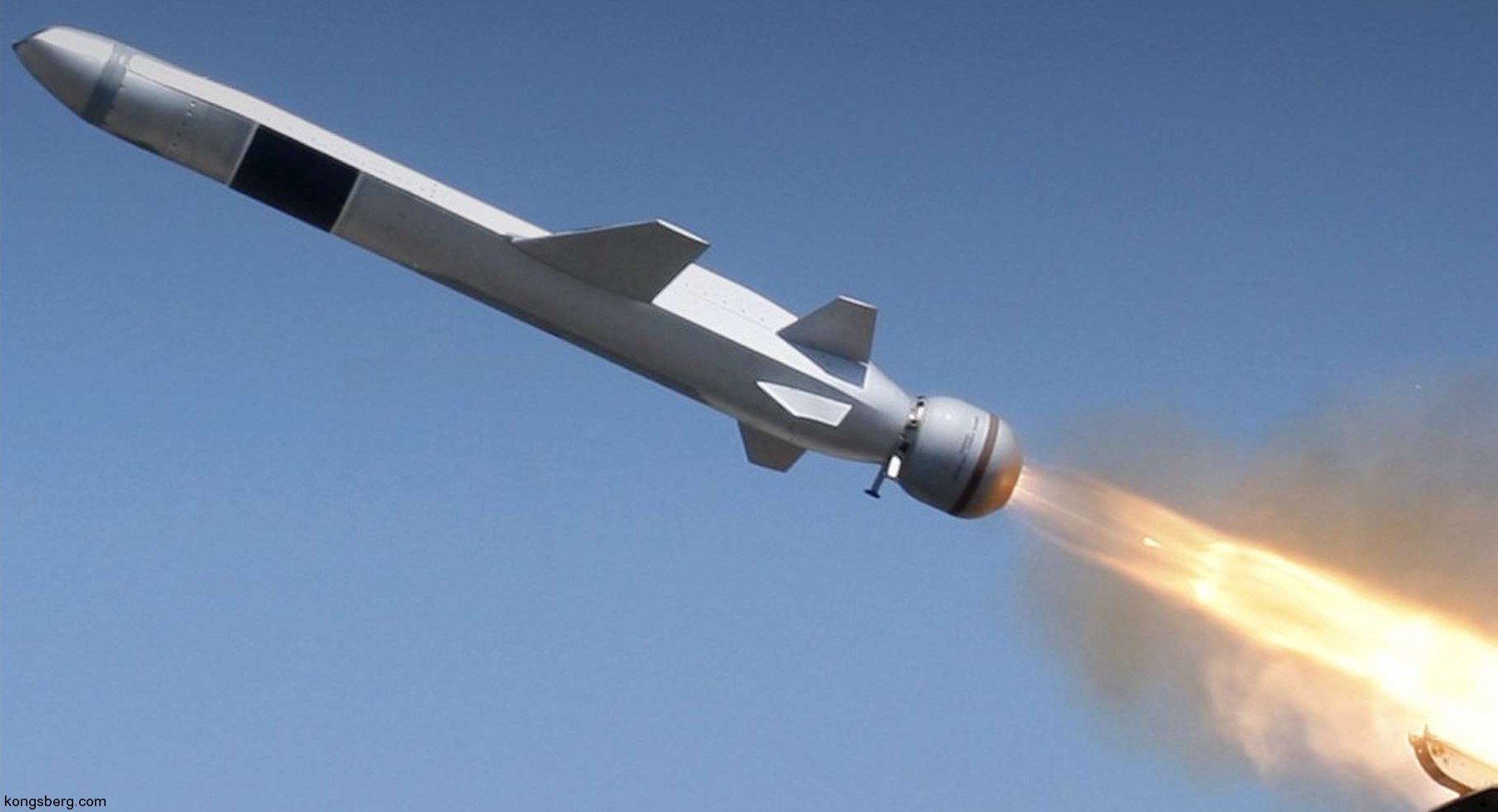 cutout 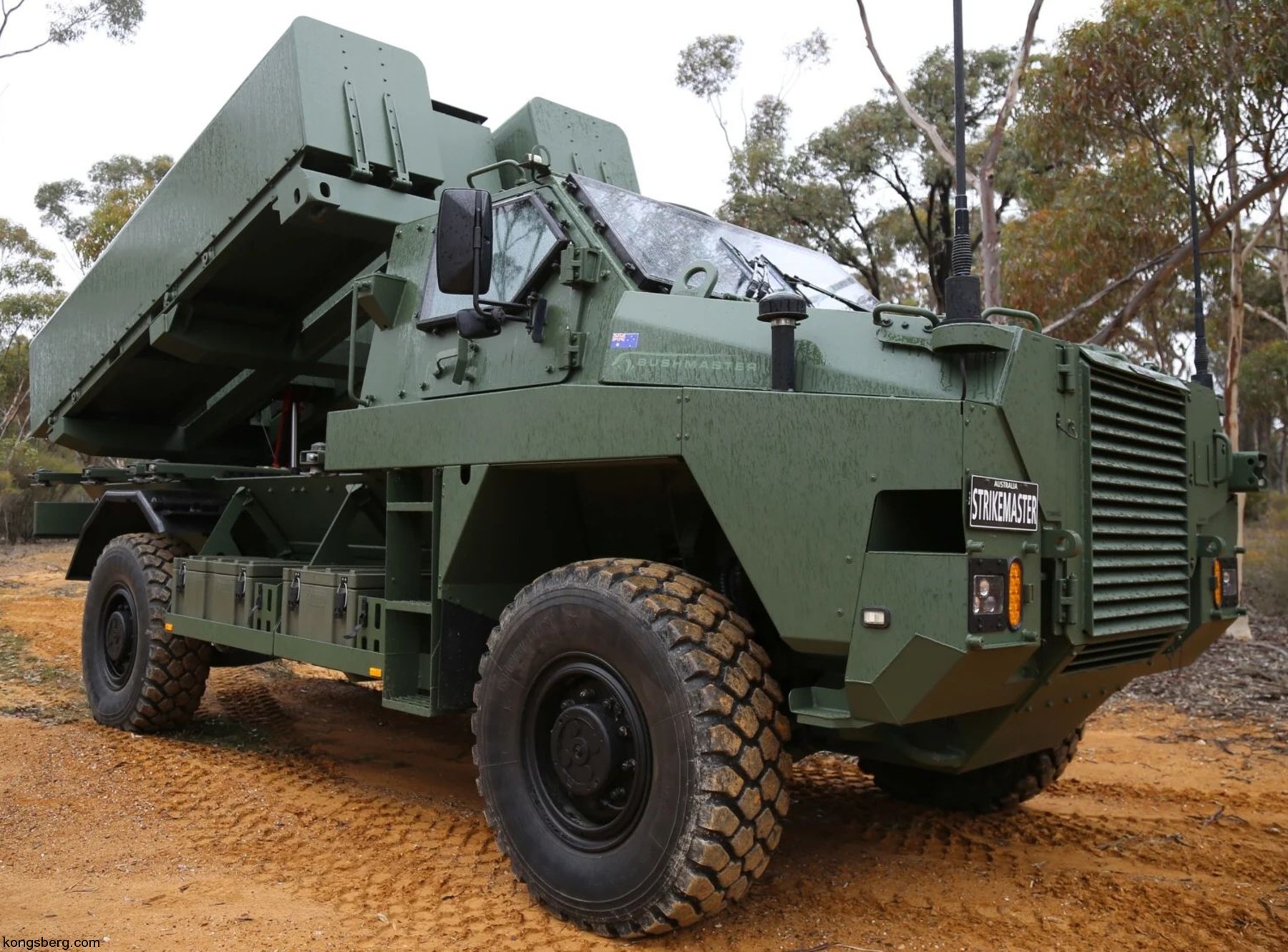 Australian Strikemaster NSM Coastal Defence System, using the Thales Bushmaster vehicle 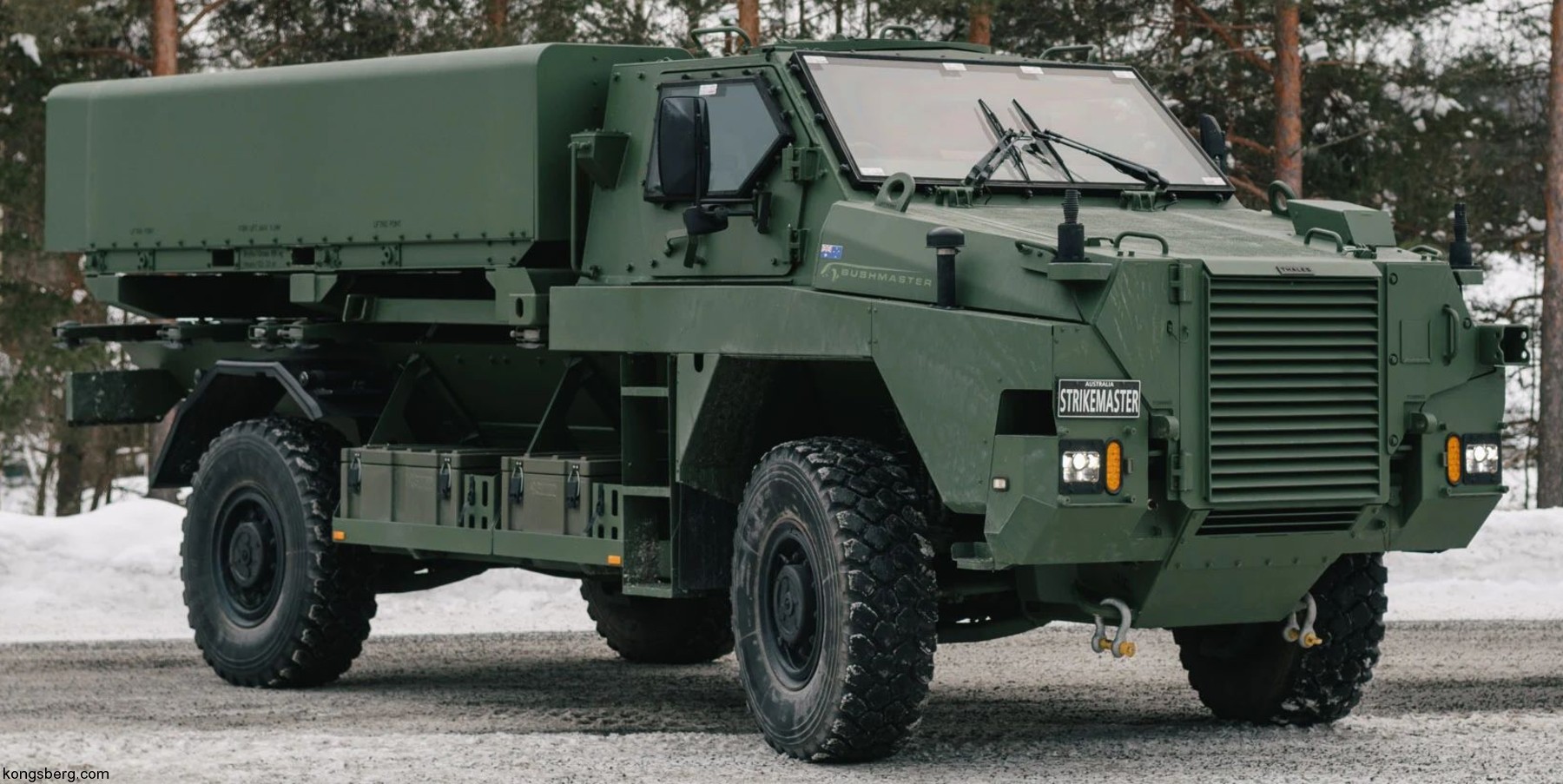 Australian Strikemaster NSM Coastal Defence System, using the Thales Bushmaster vehicle 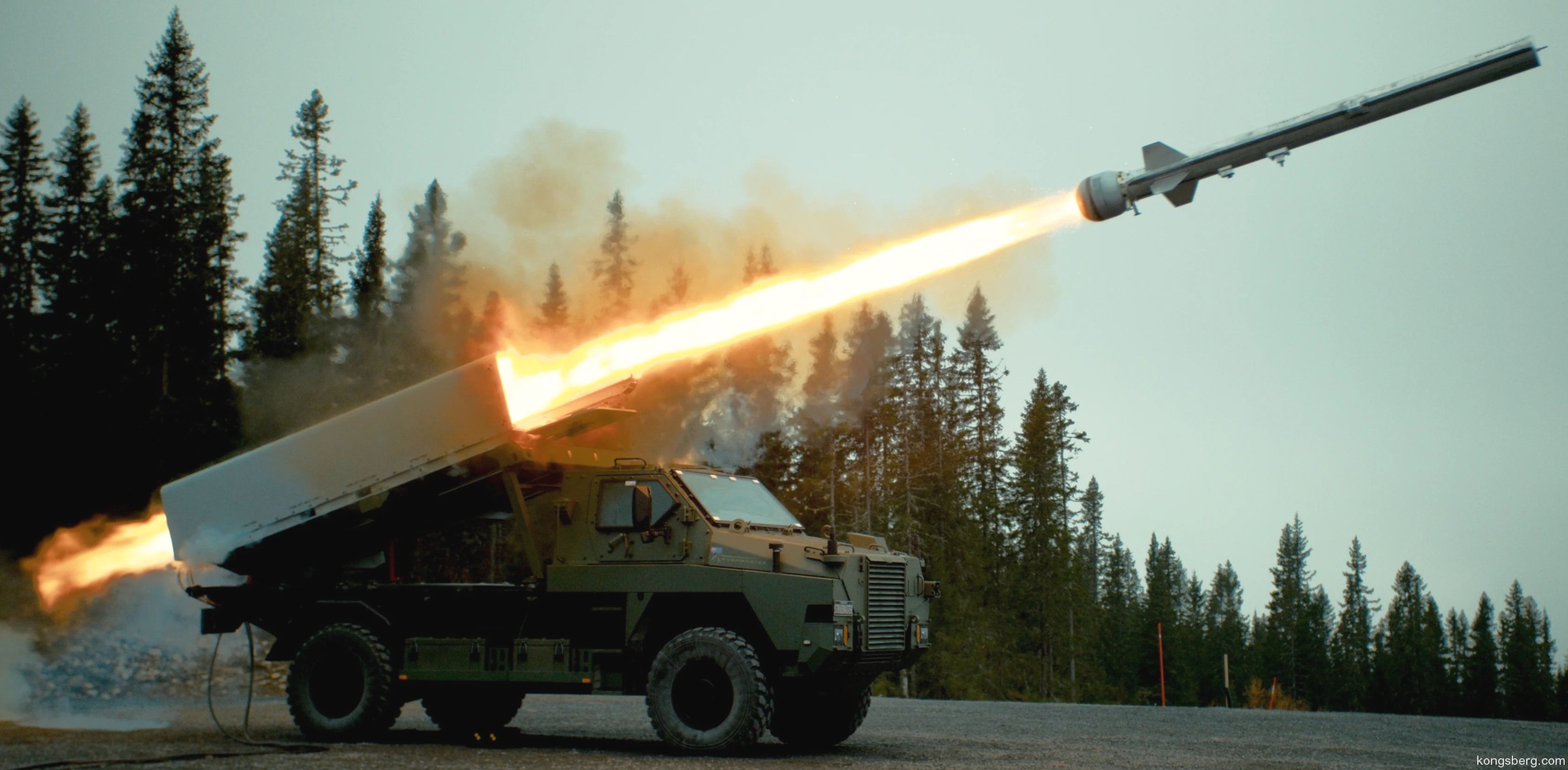 Australian Strikemaster NSM Coastal Defence System, using the Thales Bushmaster vehicle 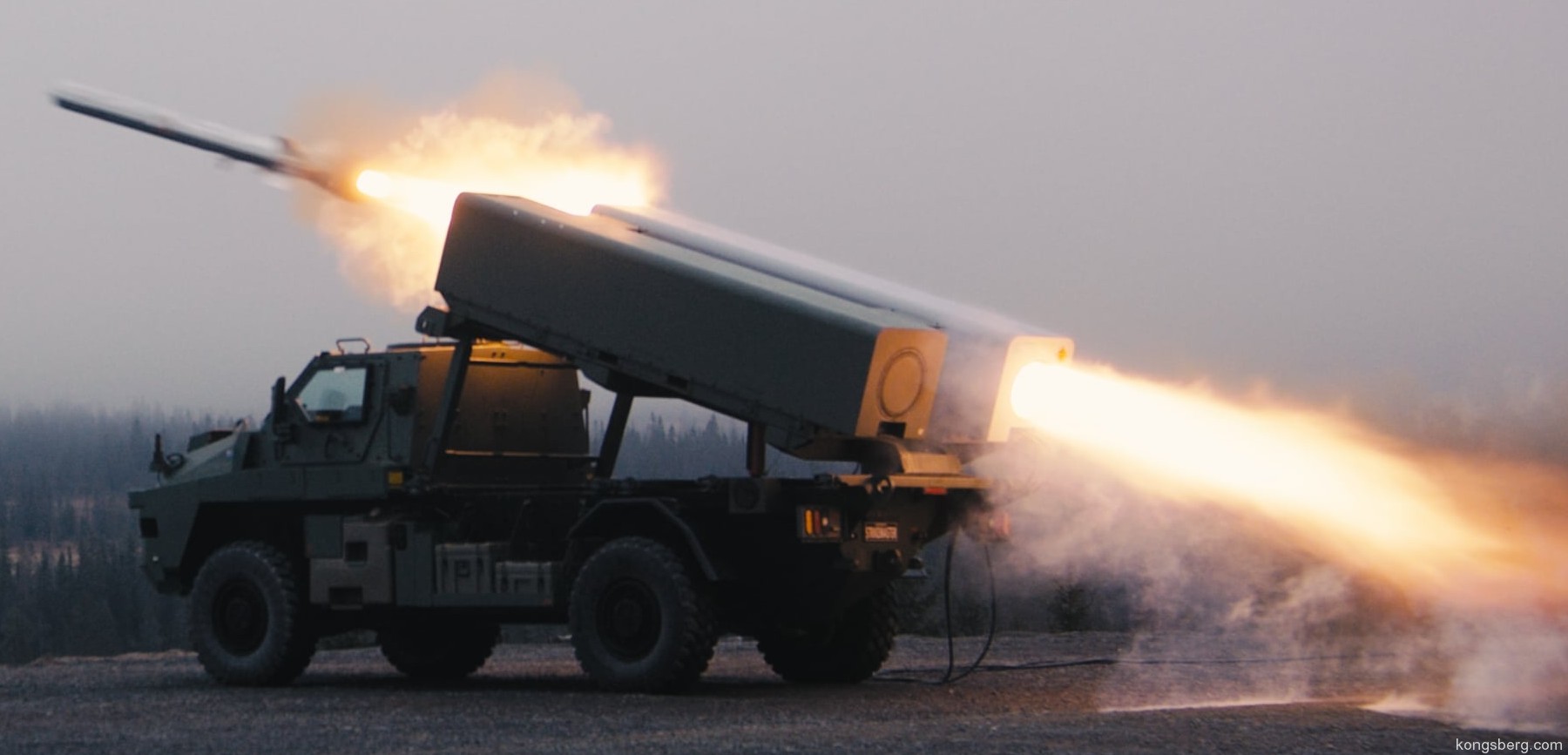 Australian Strikemaster NSM Coastal Defence System, using the Thales Bushmaster vehicle 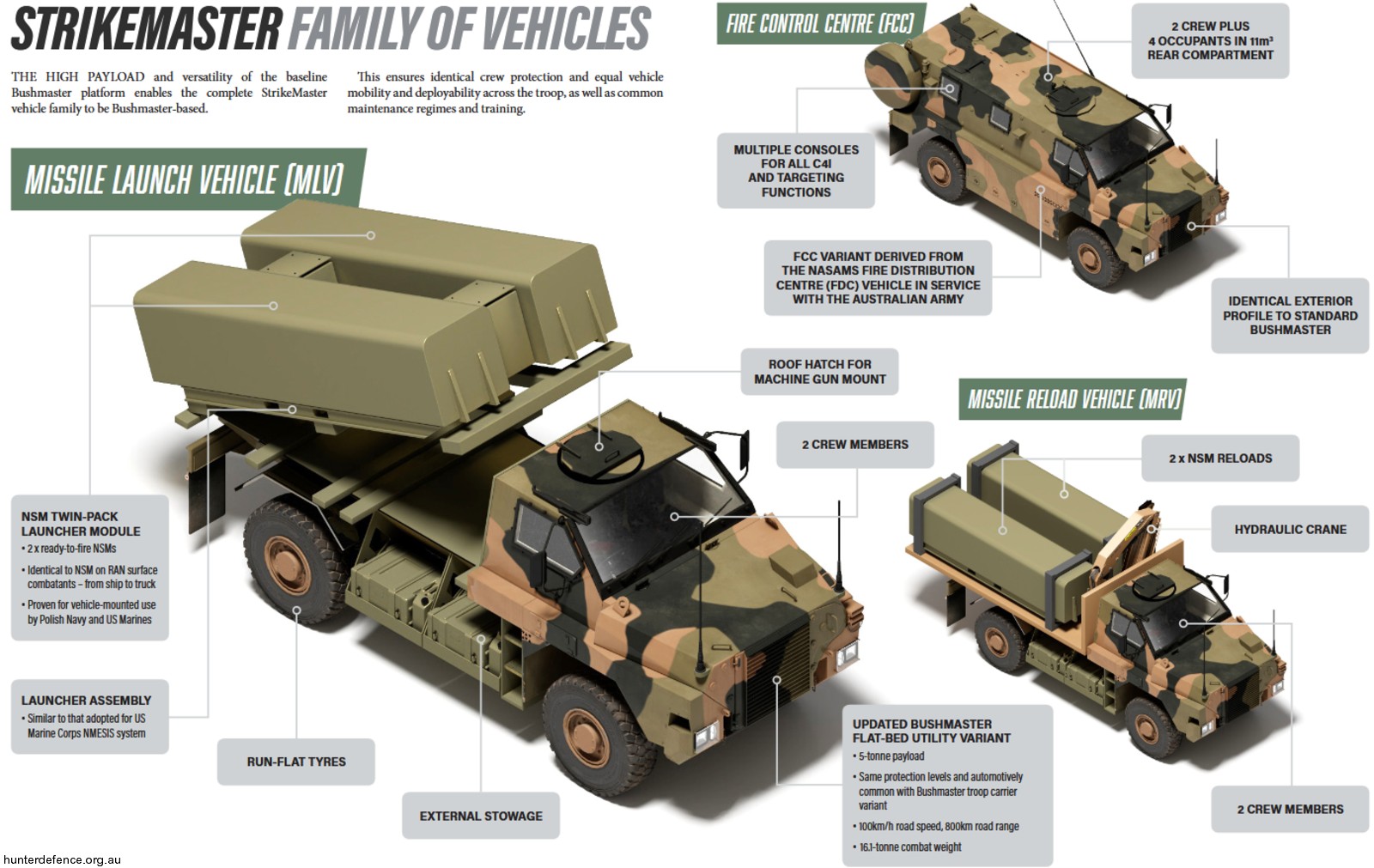 US Navy/Marine Corps NMESIS system - remote vehicle carried Naval Strike Missile (NSM) 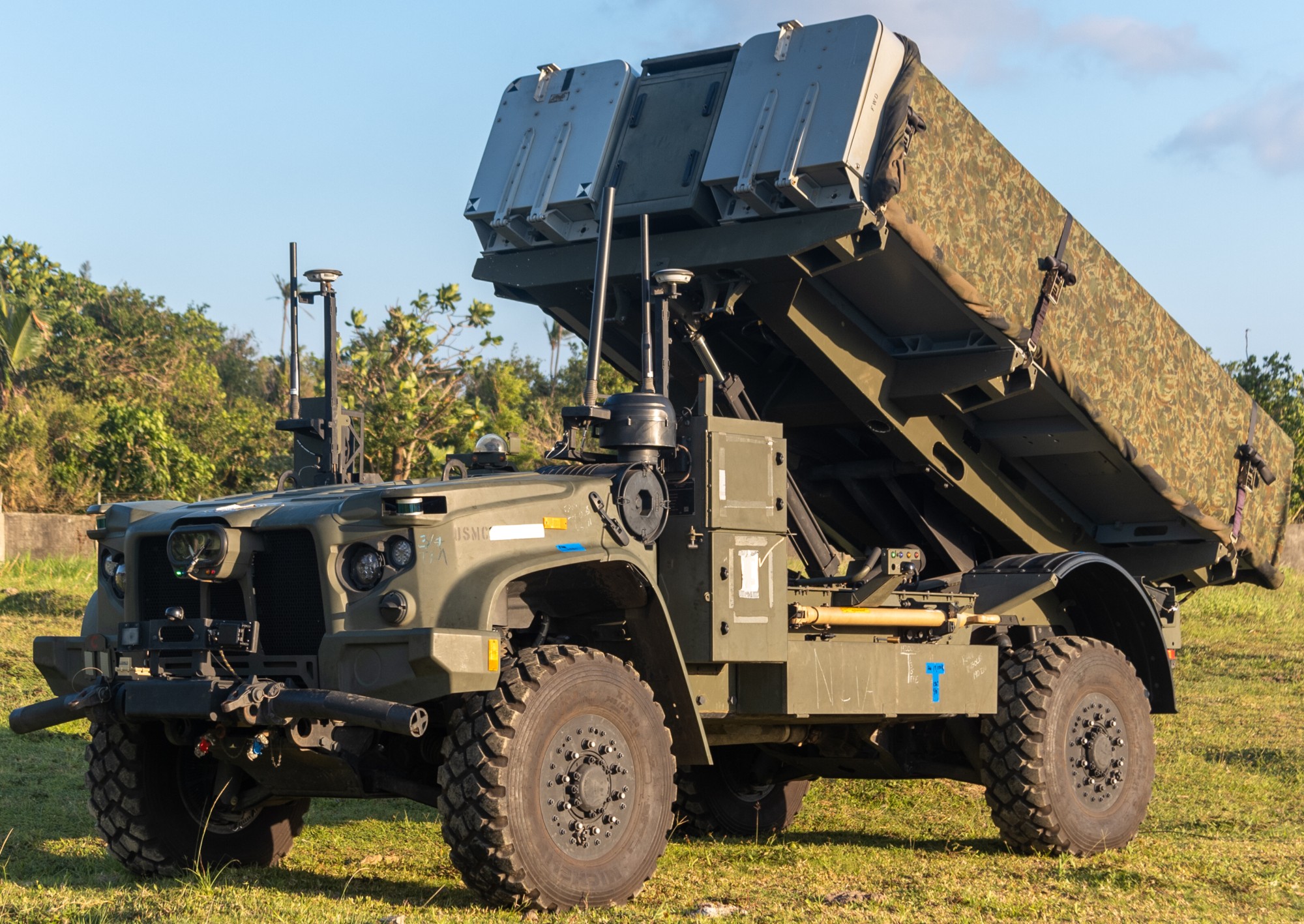 Navy/Marine Corps Expeditionary Ship Interdiction System (NMESIS) 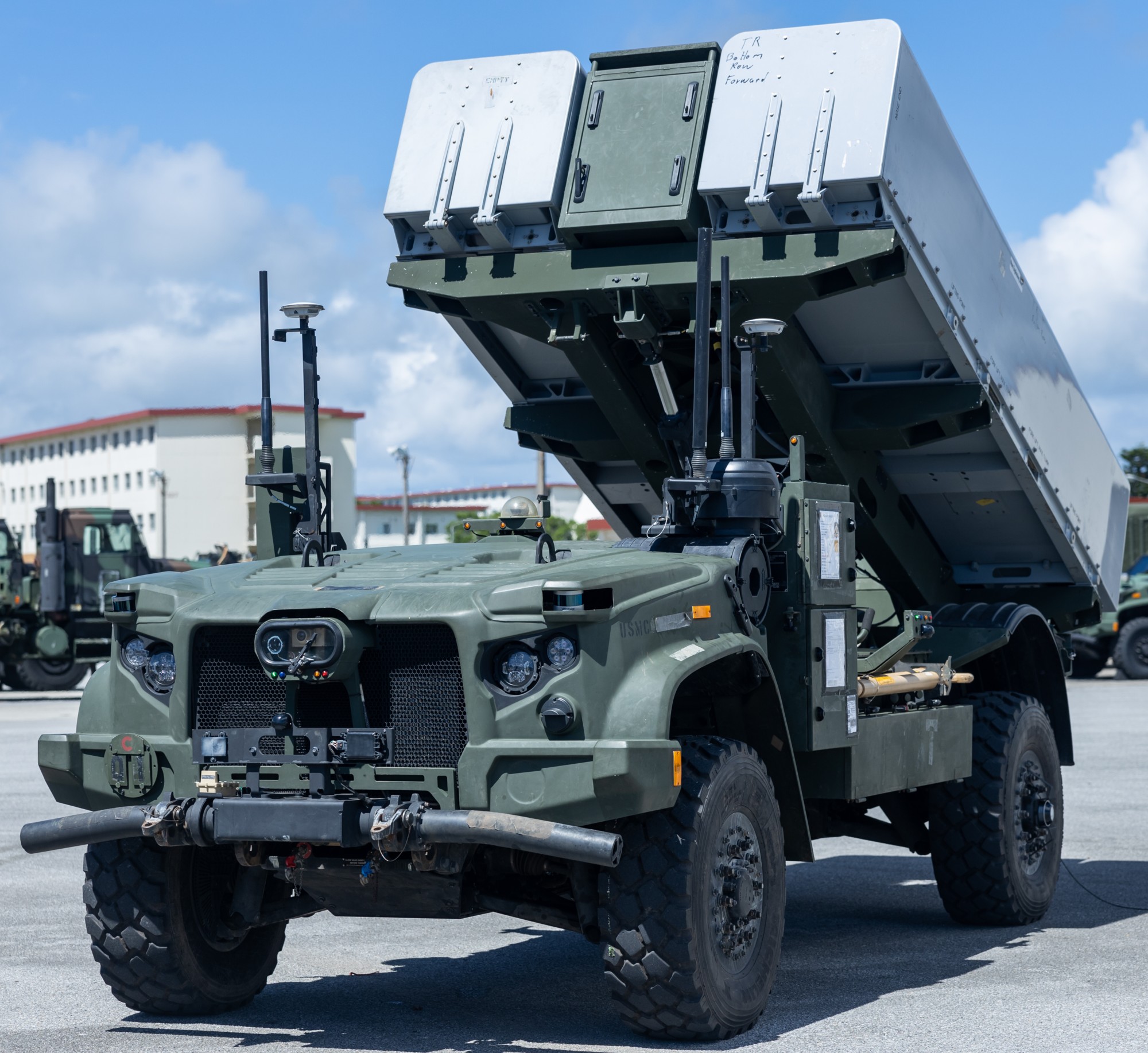 Navy/Marine Corps Expeditionary Ship Interdiction System (NMESIS) 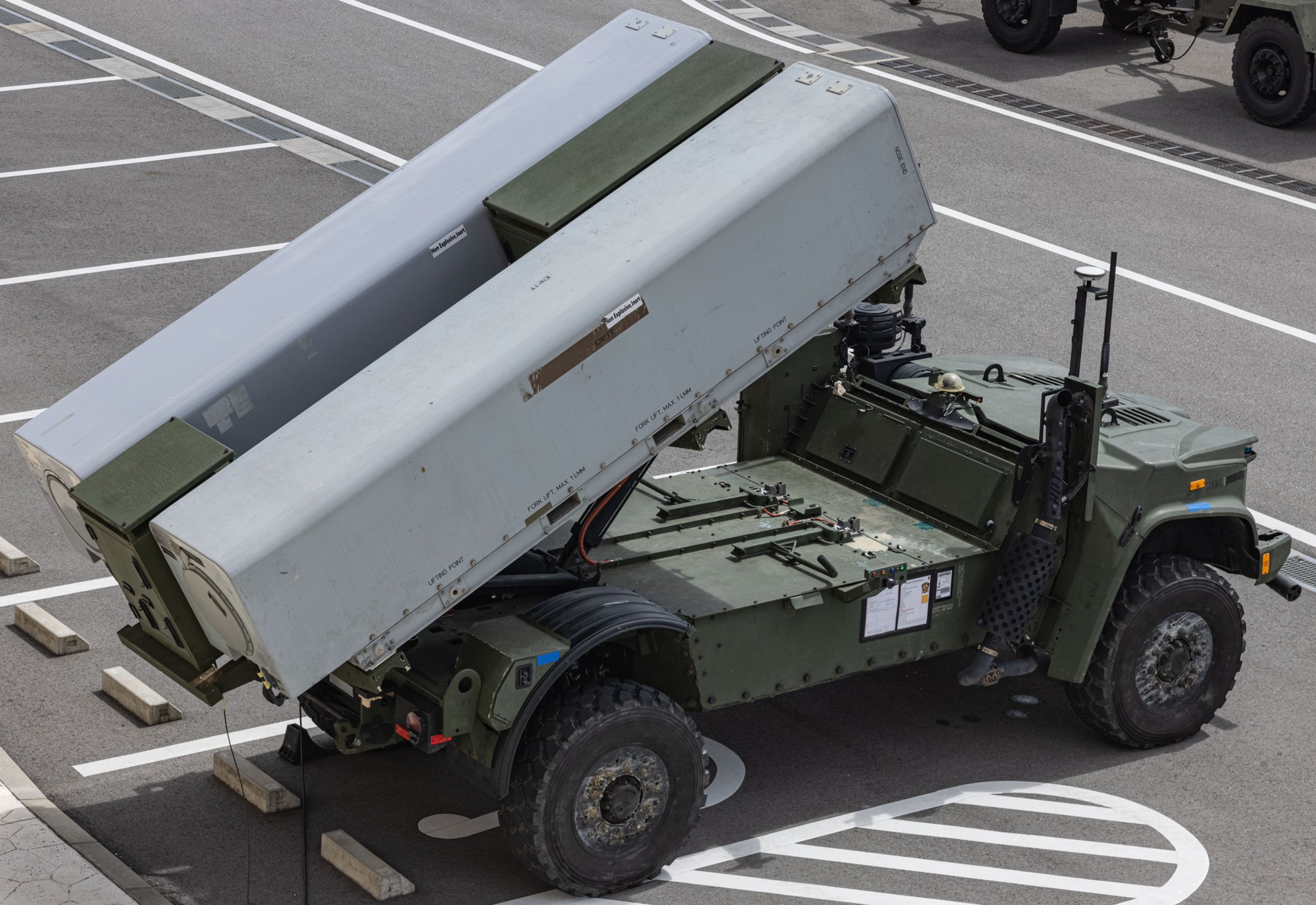 Navy/Marine Corps Expeditionary Ship Interdiction System (NMESIS) 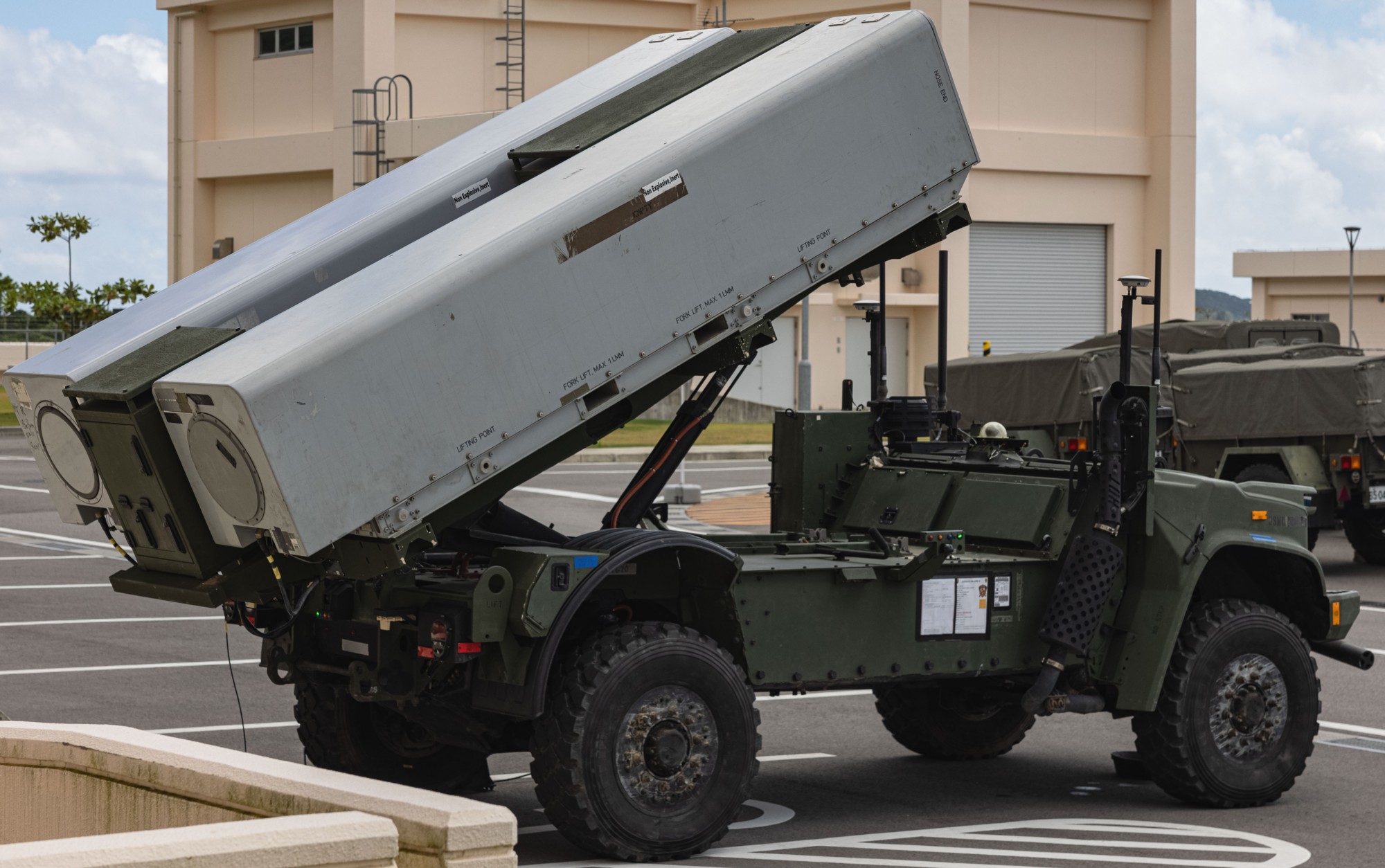 Navy/Marine Corps Expeditionary Ship Interdiction System (NMESIS) 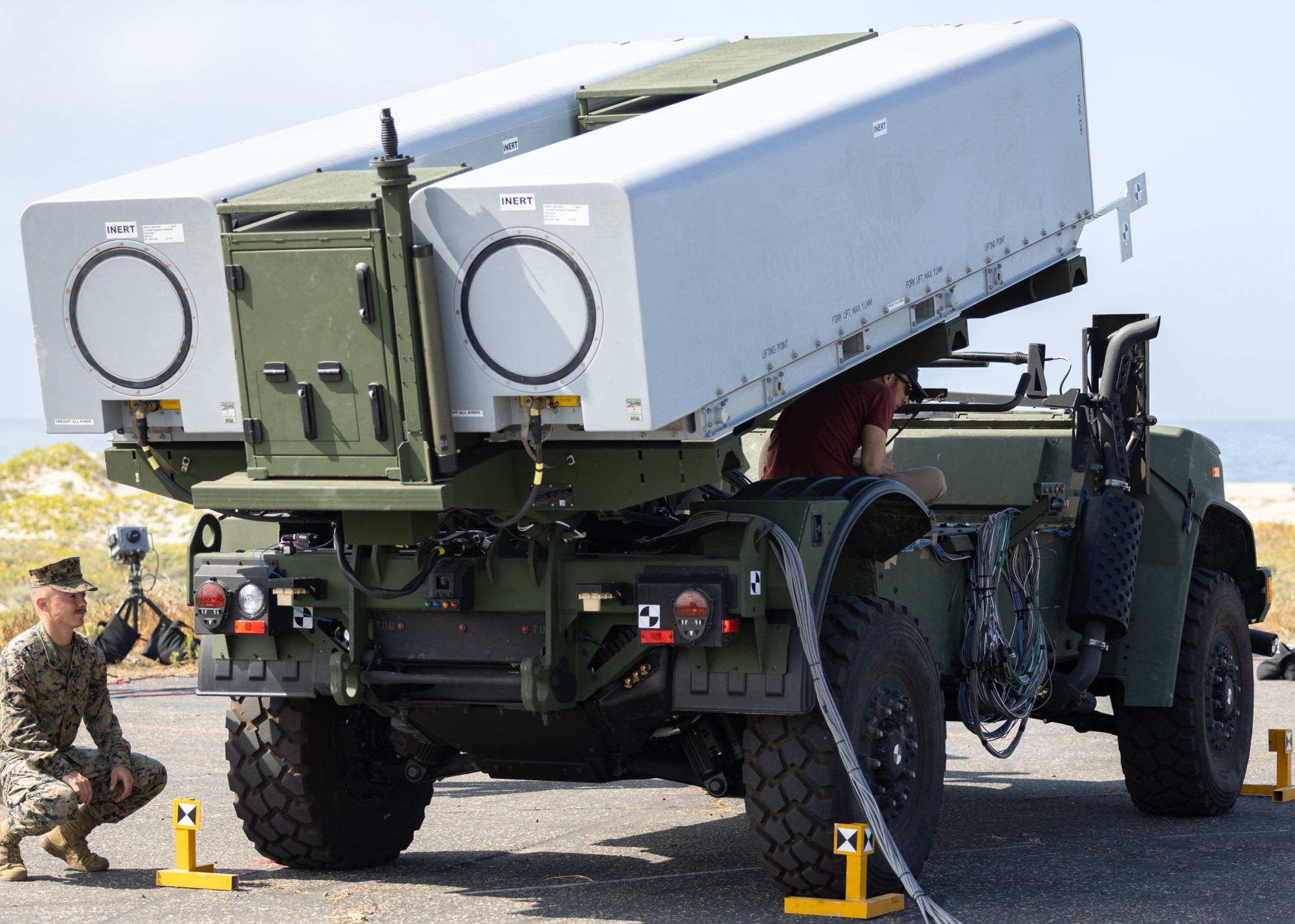 Navy/Marine Corps Expeditionary Ship Interdiction System (NMESIS) 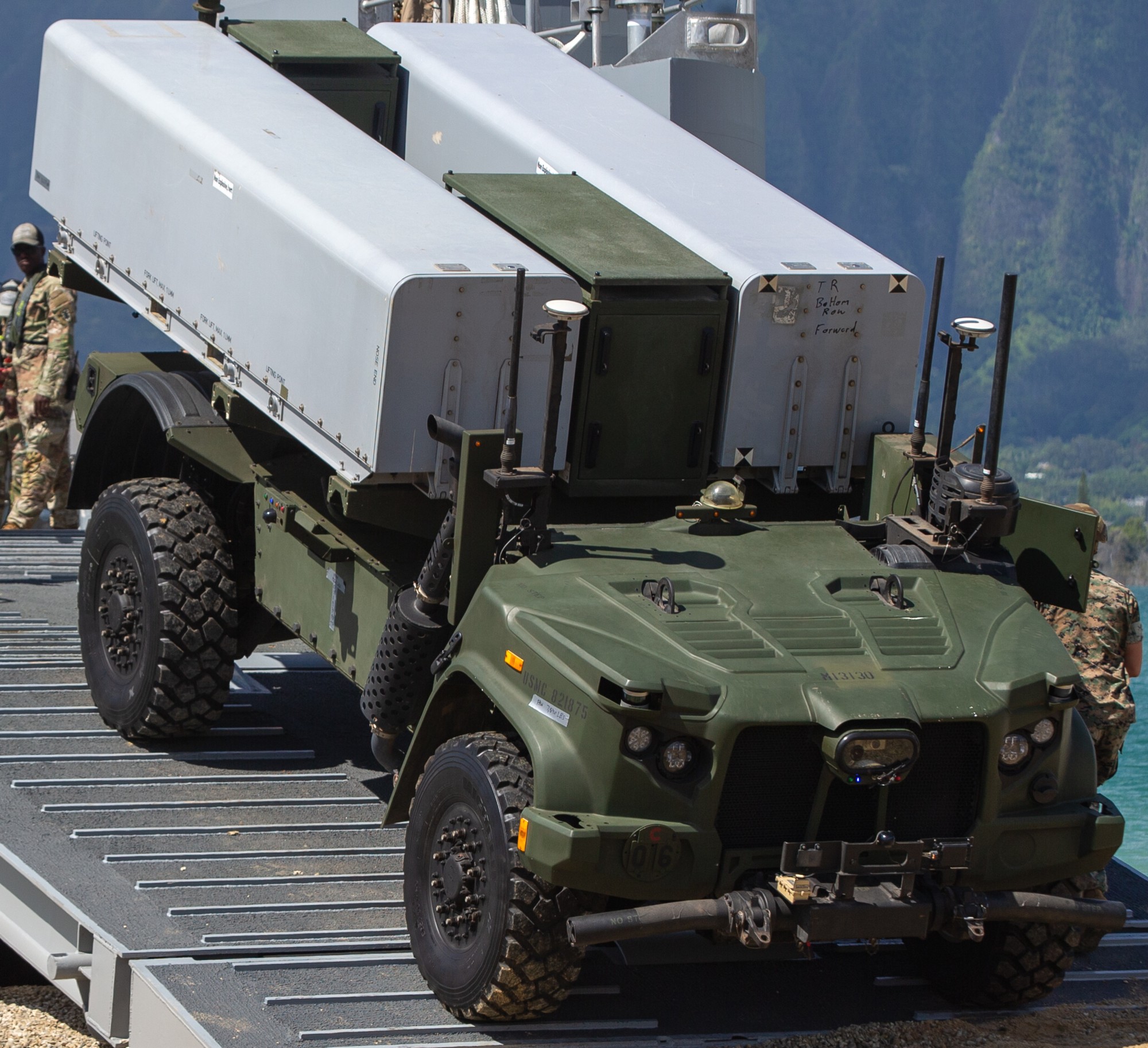 Navy/Marine Corps Expeditionary Ship Interdiction System (NMESIS) 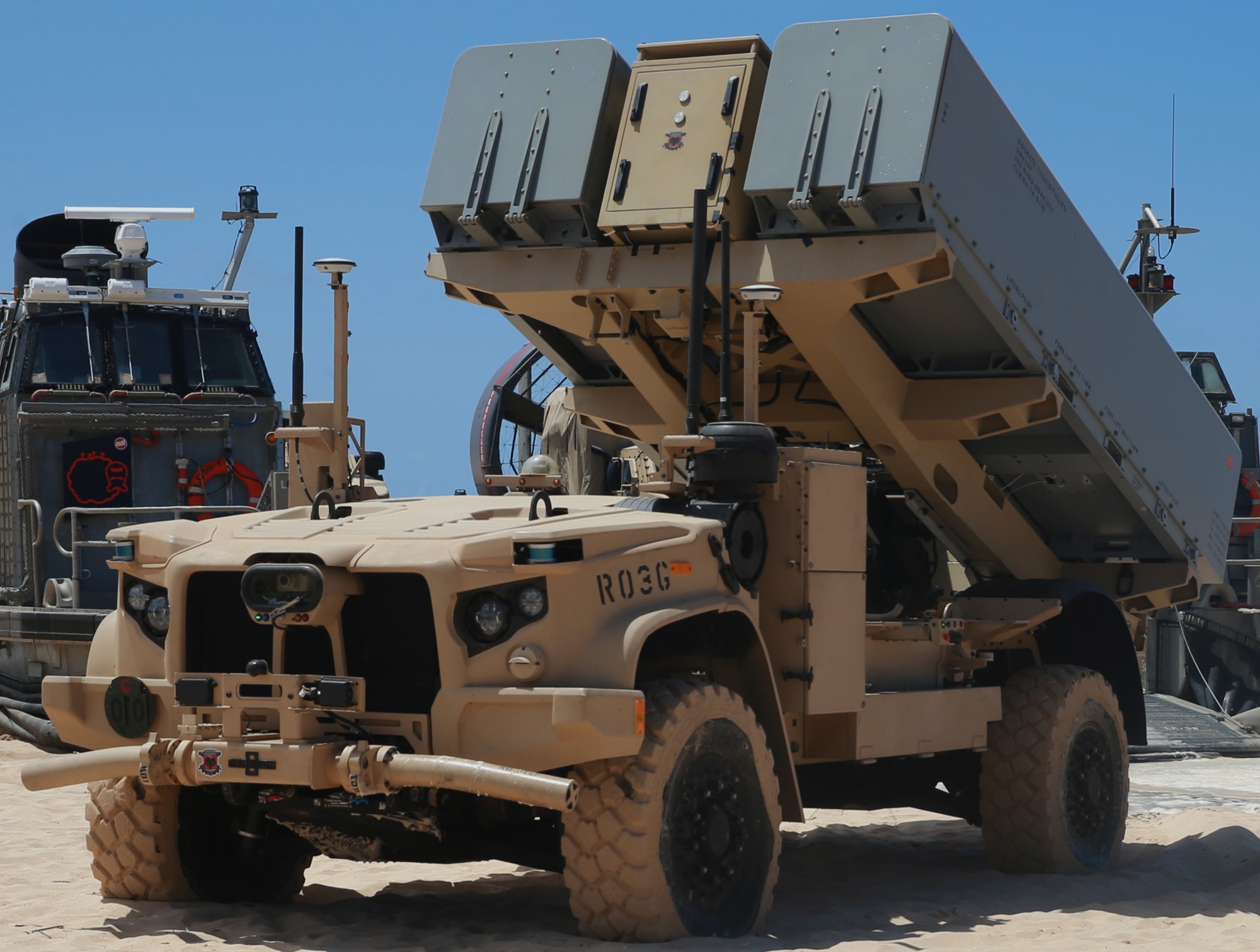 Navy/Marine Corps Expeditionary Ship Interdiction System (NMESIS) 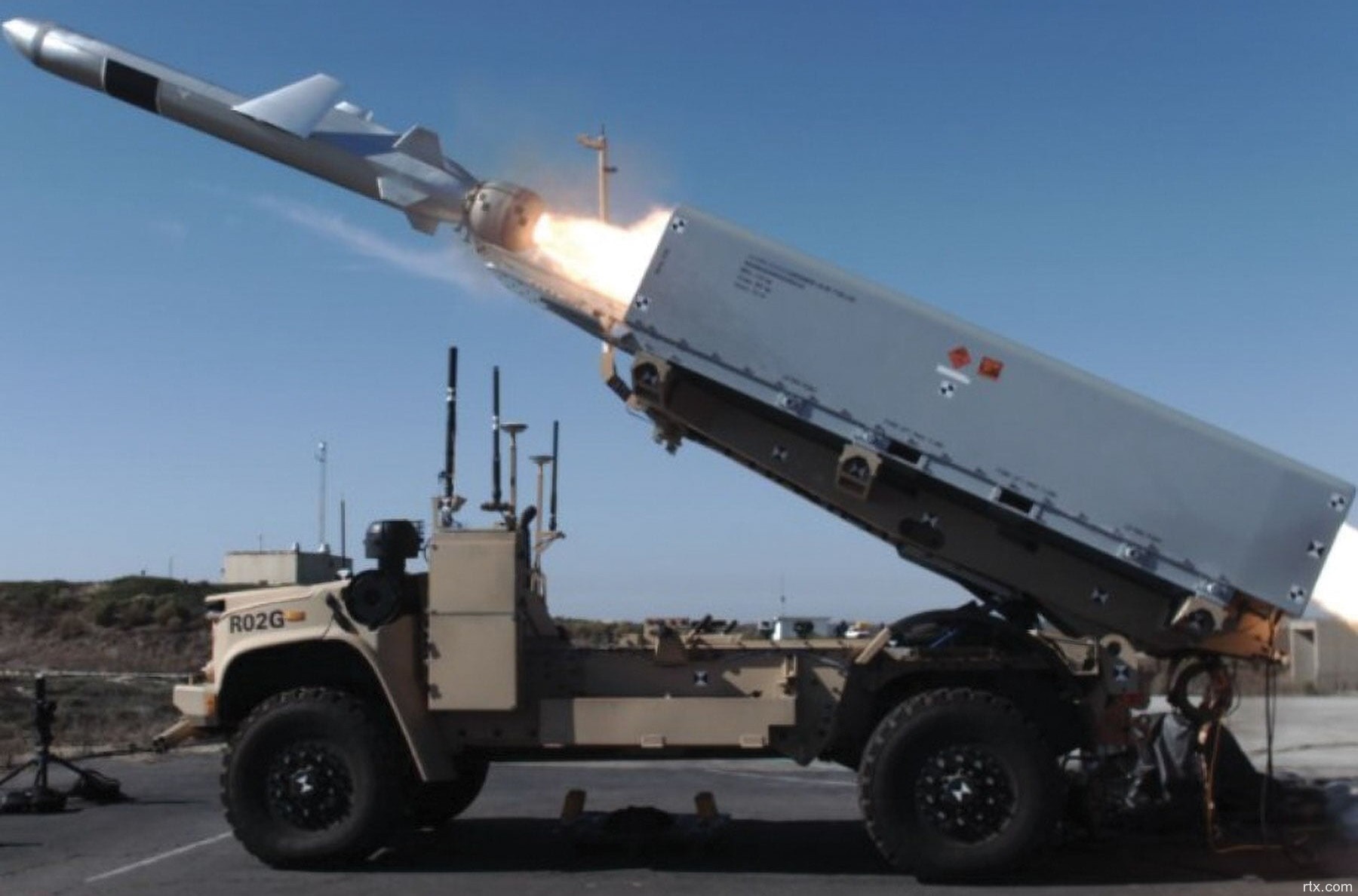 Navy/Marine Corps Expeditionary Ship Interdiction System (NMESIS) 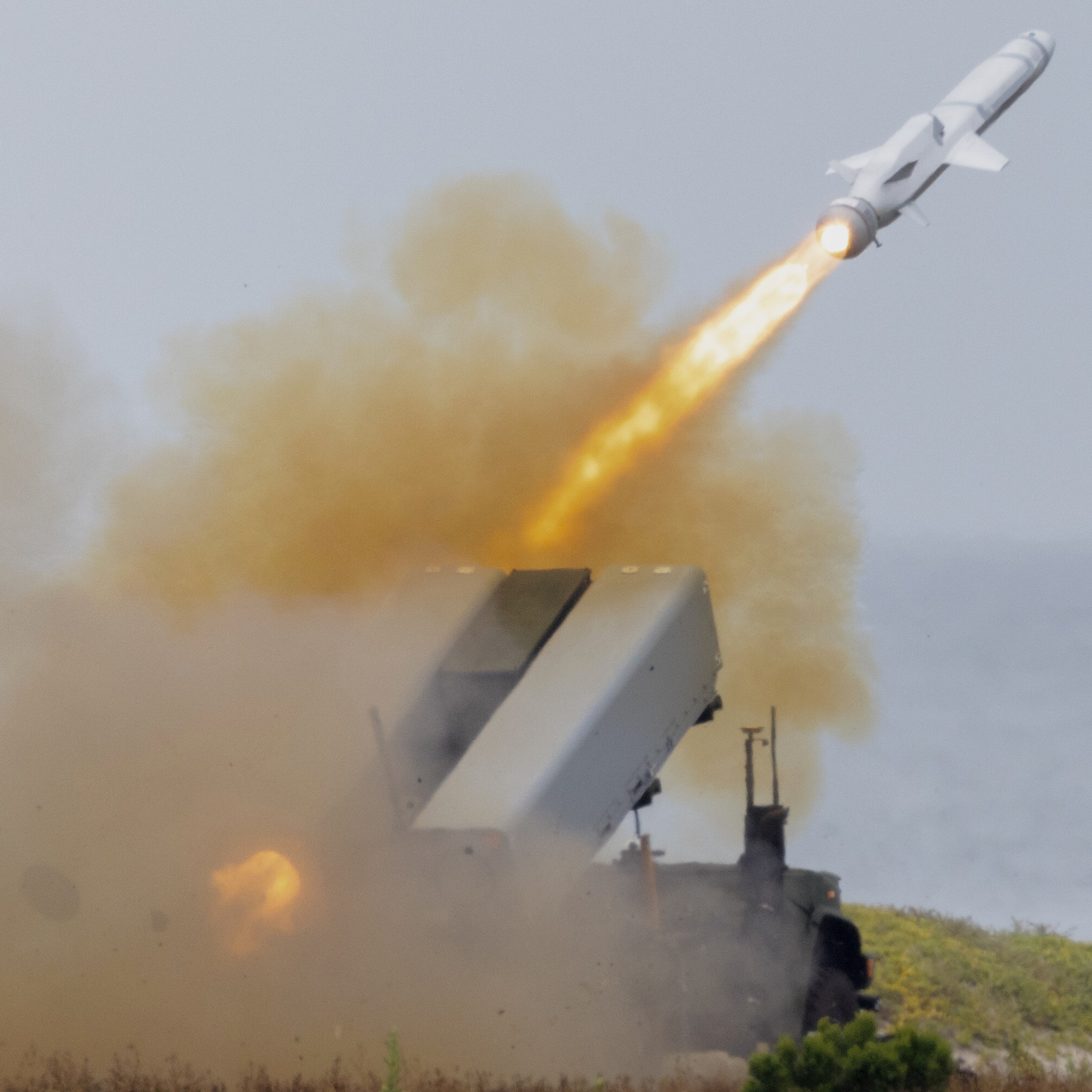 Navy/Marine Corps Expeditionary Ship Interdiction System (NMESIS) Joint Strike Missile (JSM) / AGM-184A 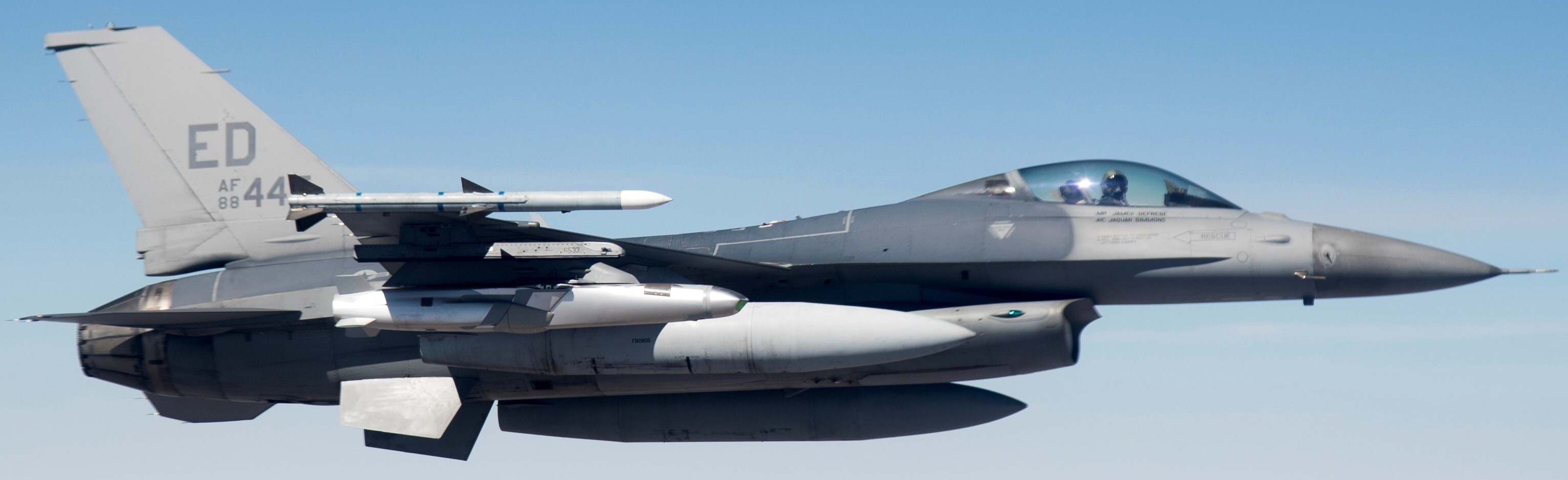 Joint Strike Missile (JSM) on an USAF F-16 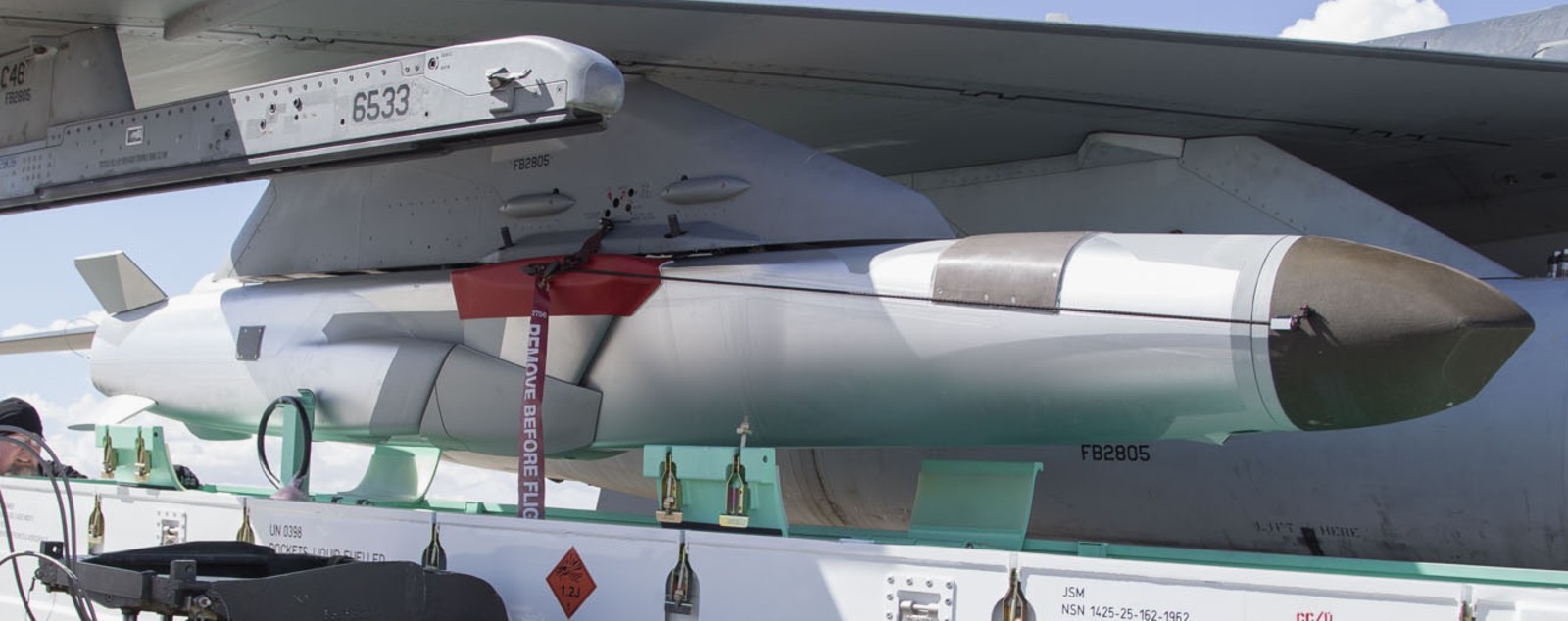 Joint Strike Missile (JSM) on an USAF F-16 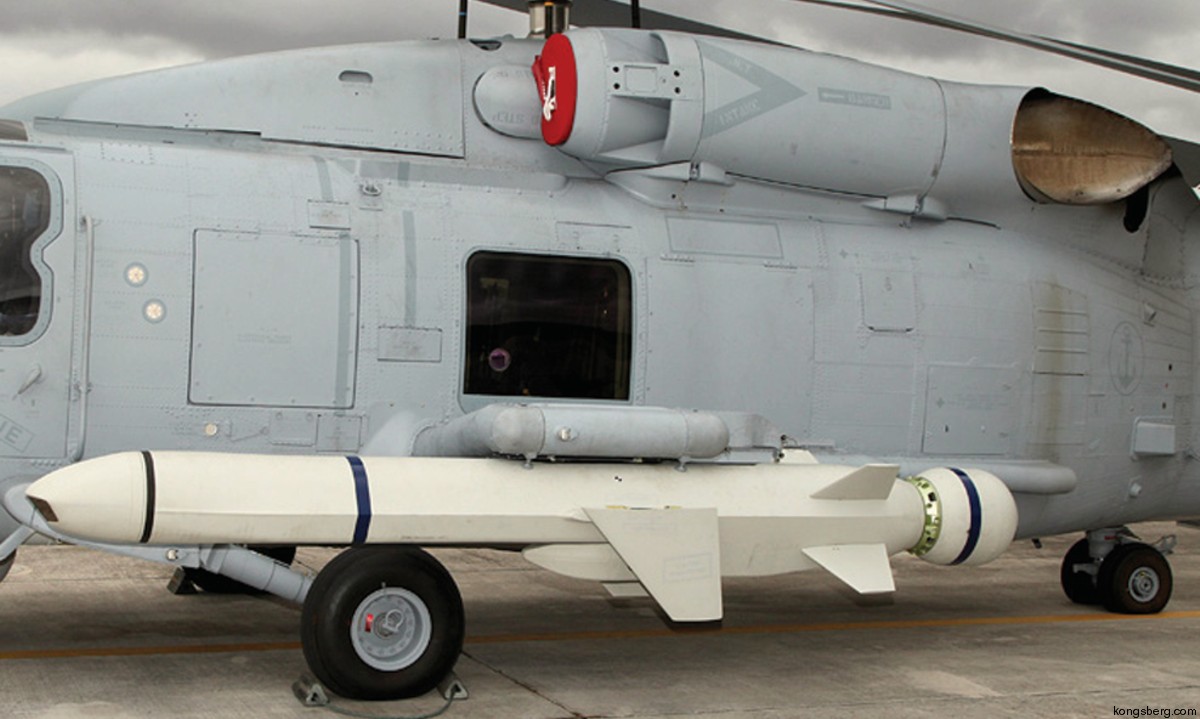 Joint Strike Missile (JSM) on an MH-60 Seahawk helicopter 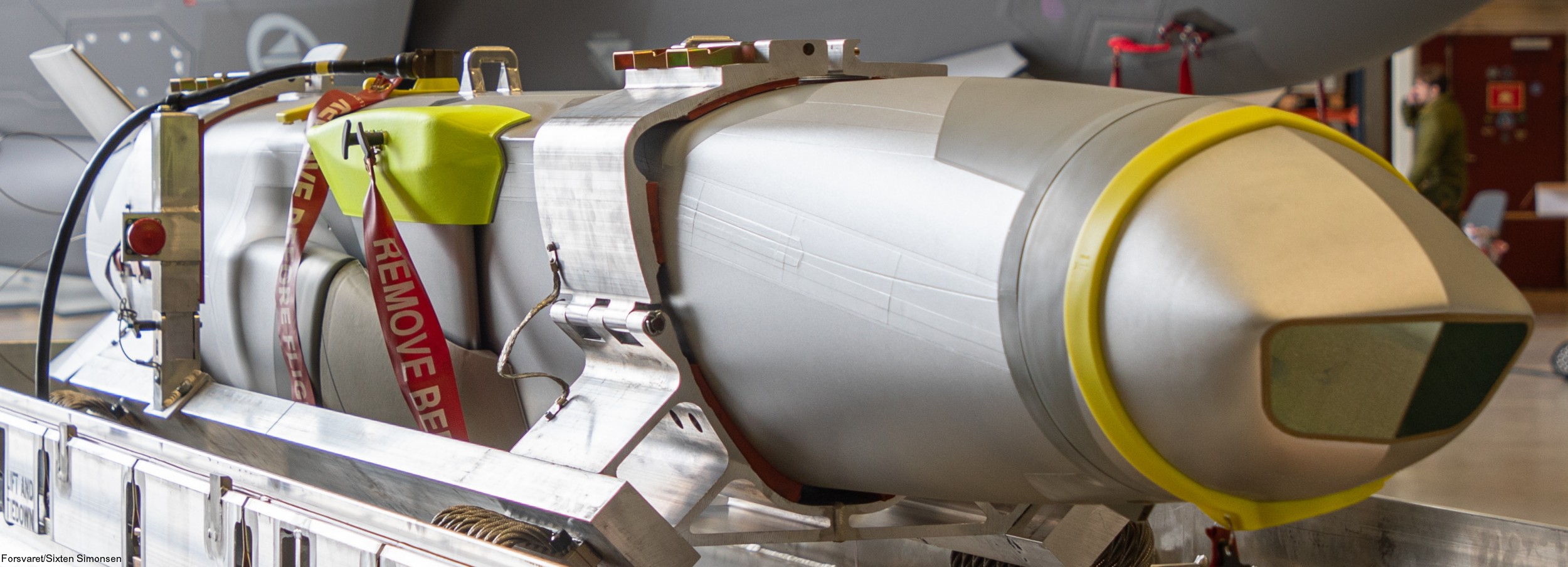 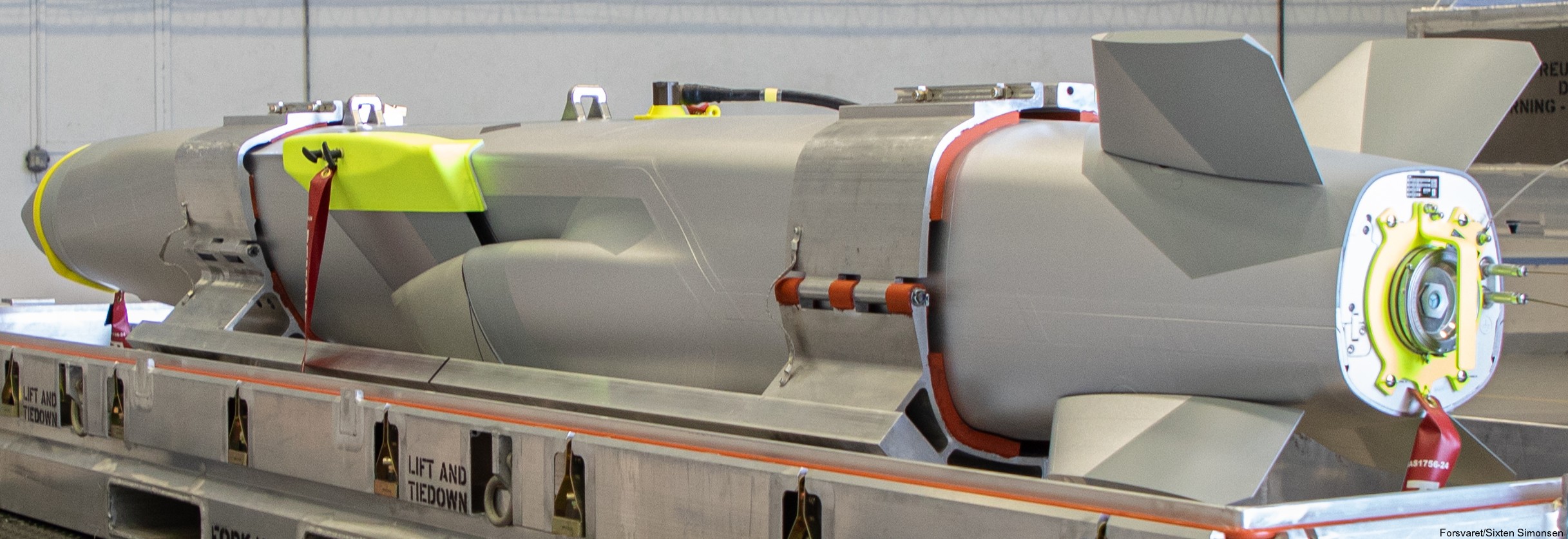 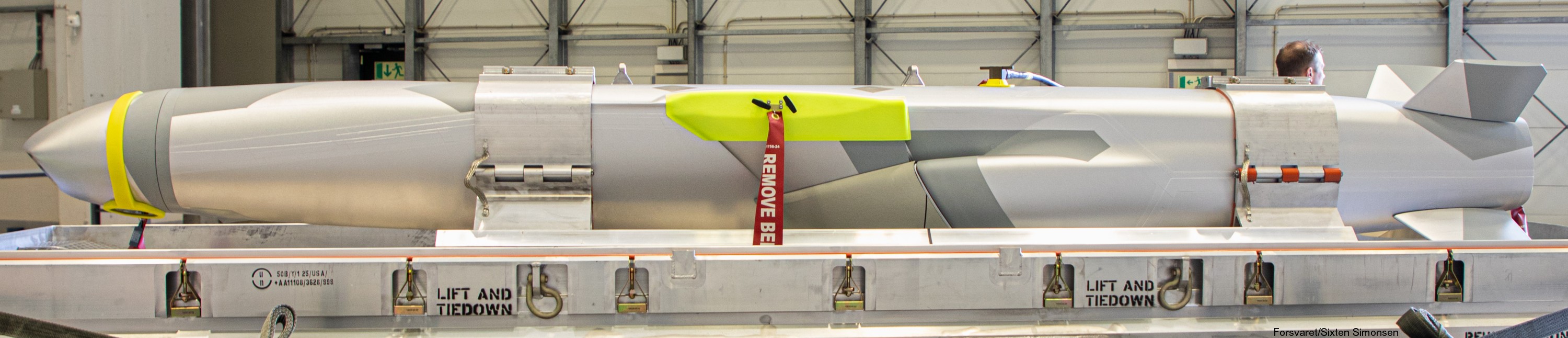 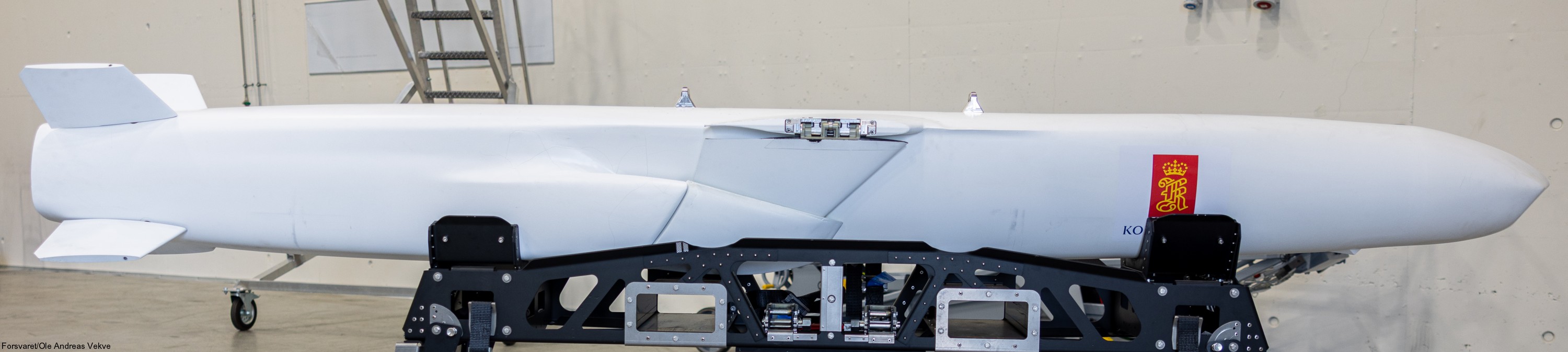 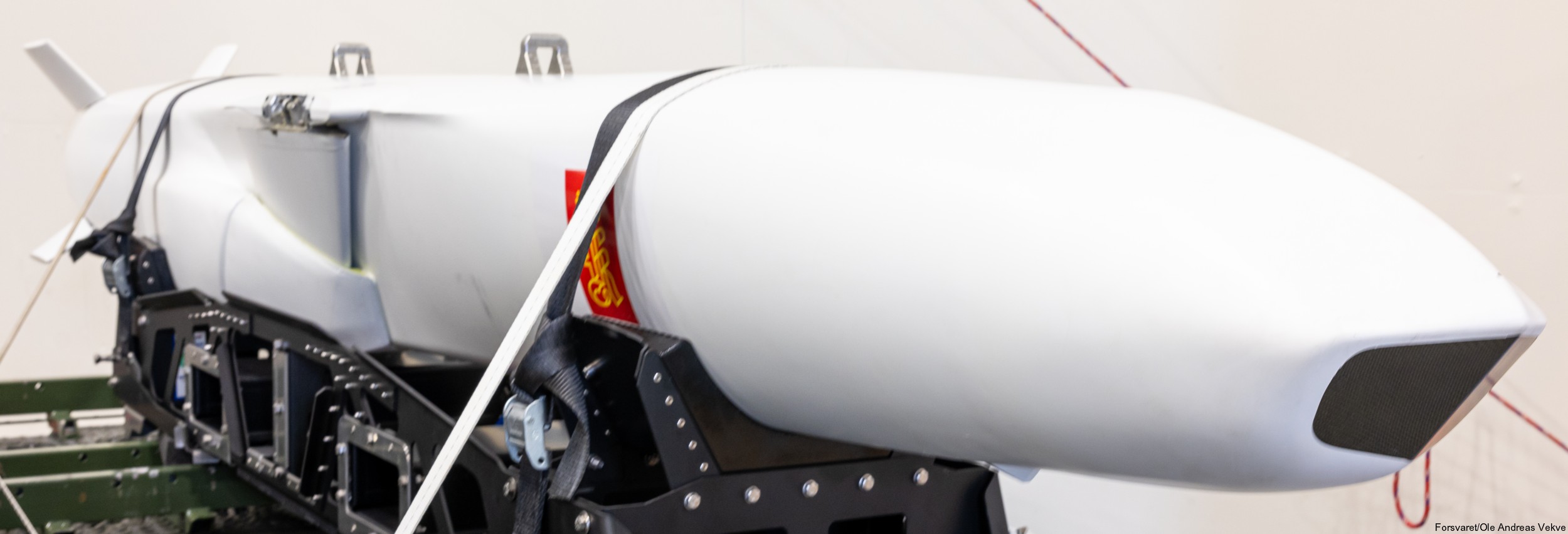 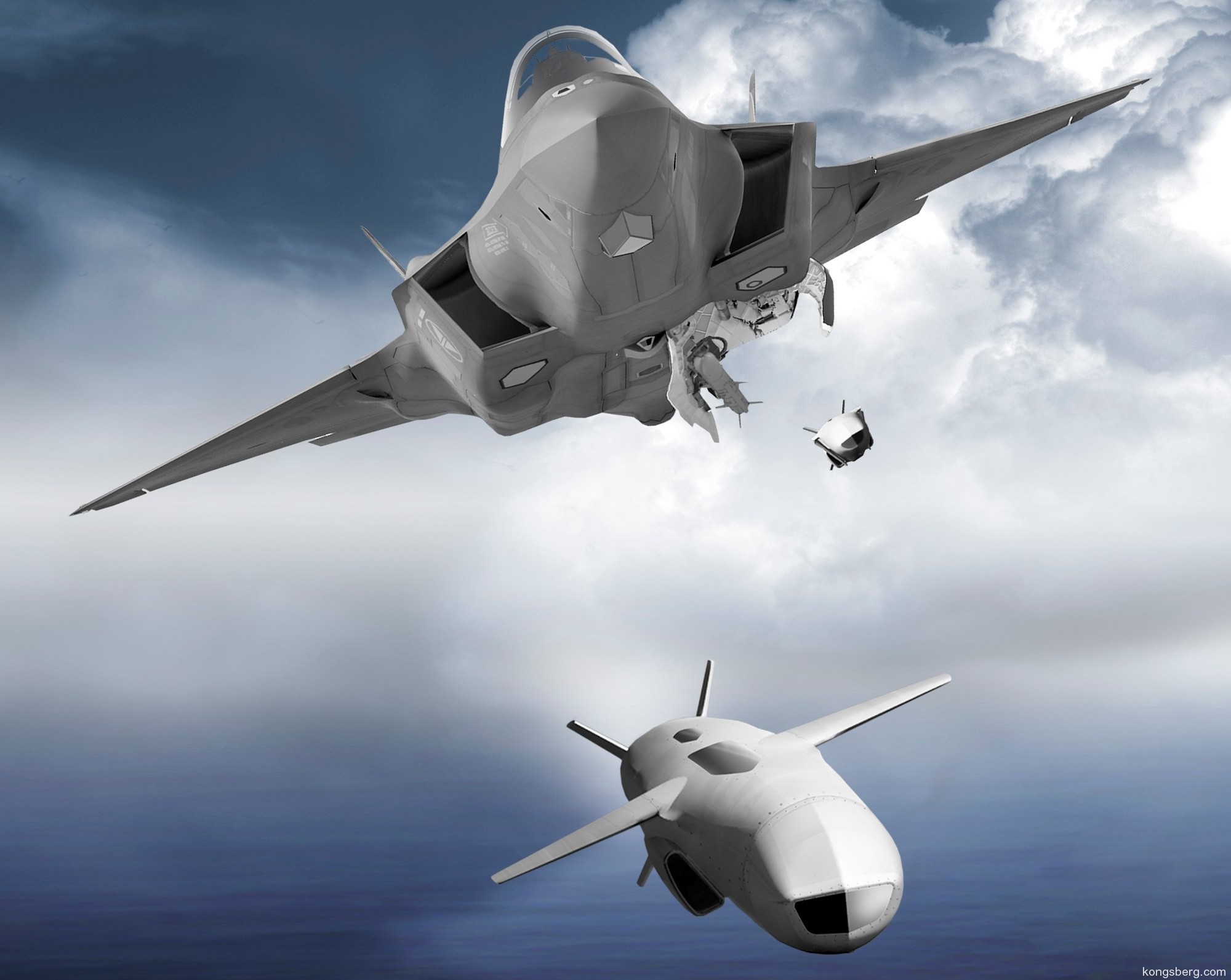 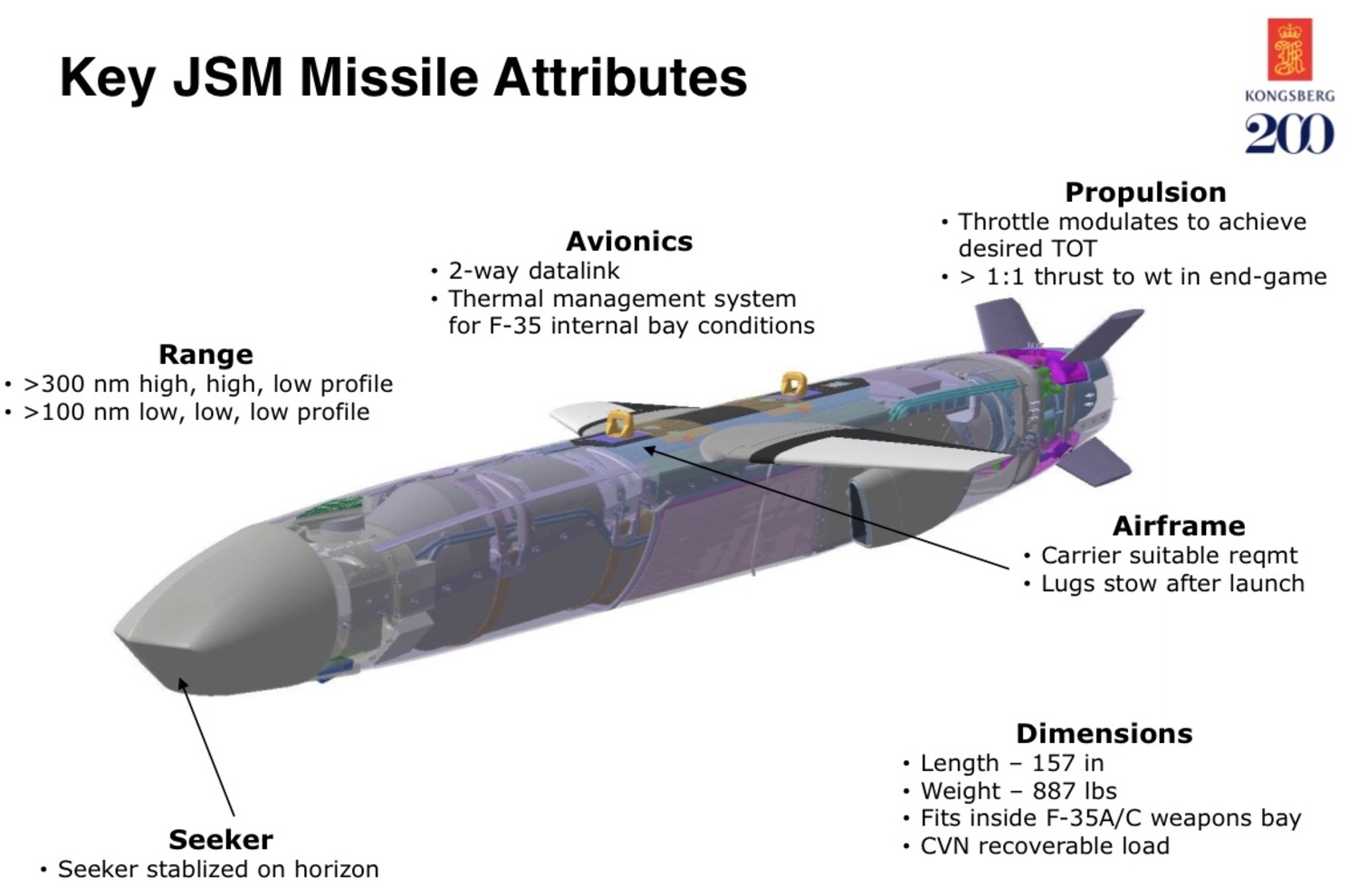 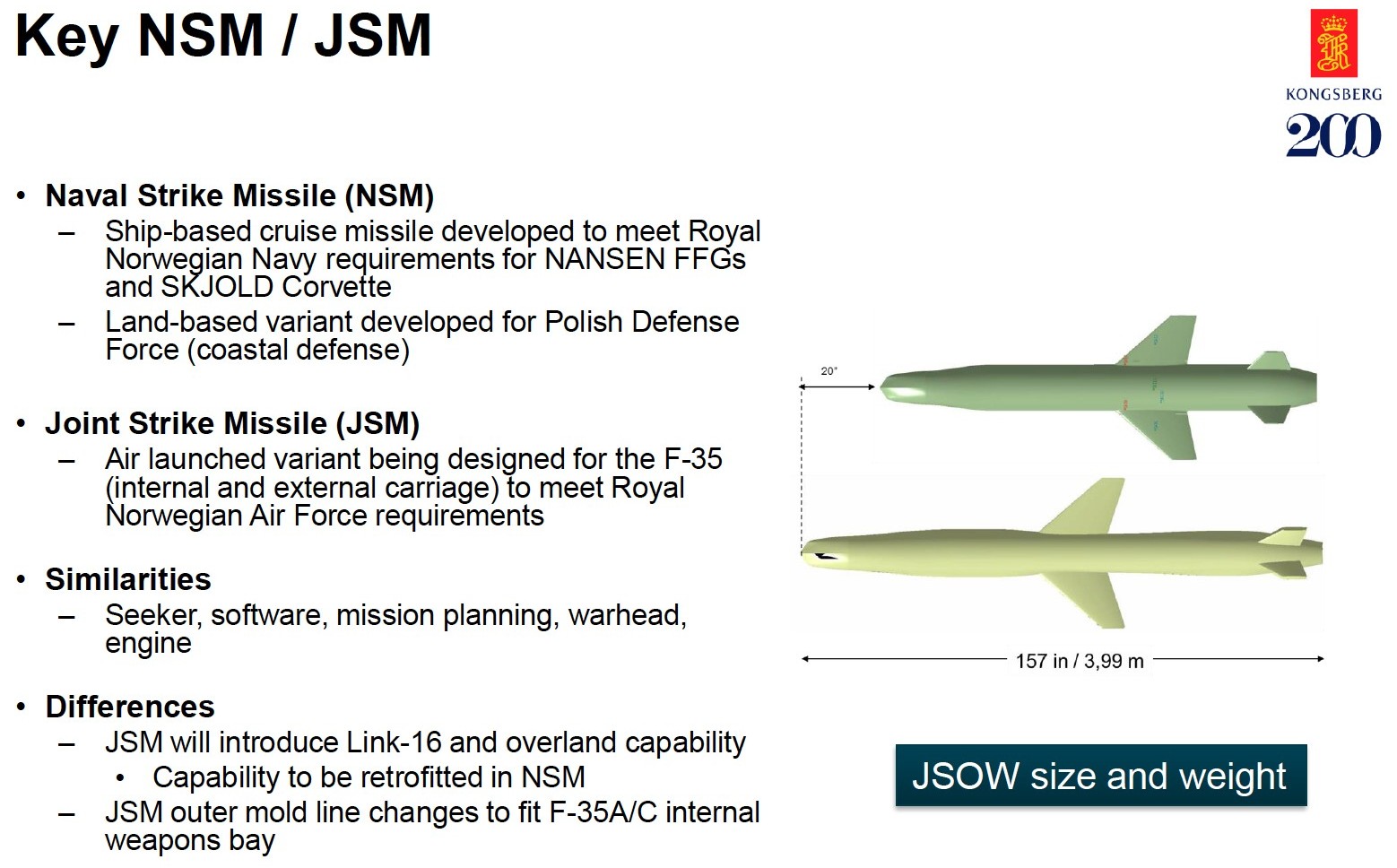 |
|
|
seaforces.org
|
Weapon Systems
start page
| |
